Catania

The colours of the cathedral

The contrast of colours offered by the cathedral’s façade is the result of specific choices by its architect Giovanni Battista Vaccarini .

The cathedral of Sant'Agata
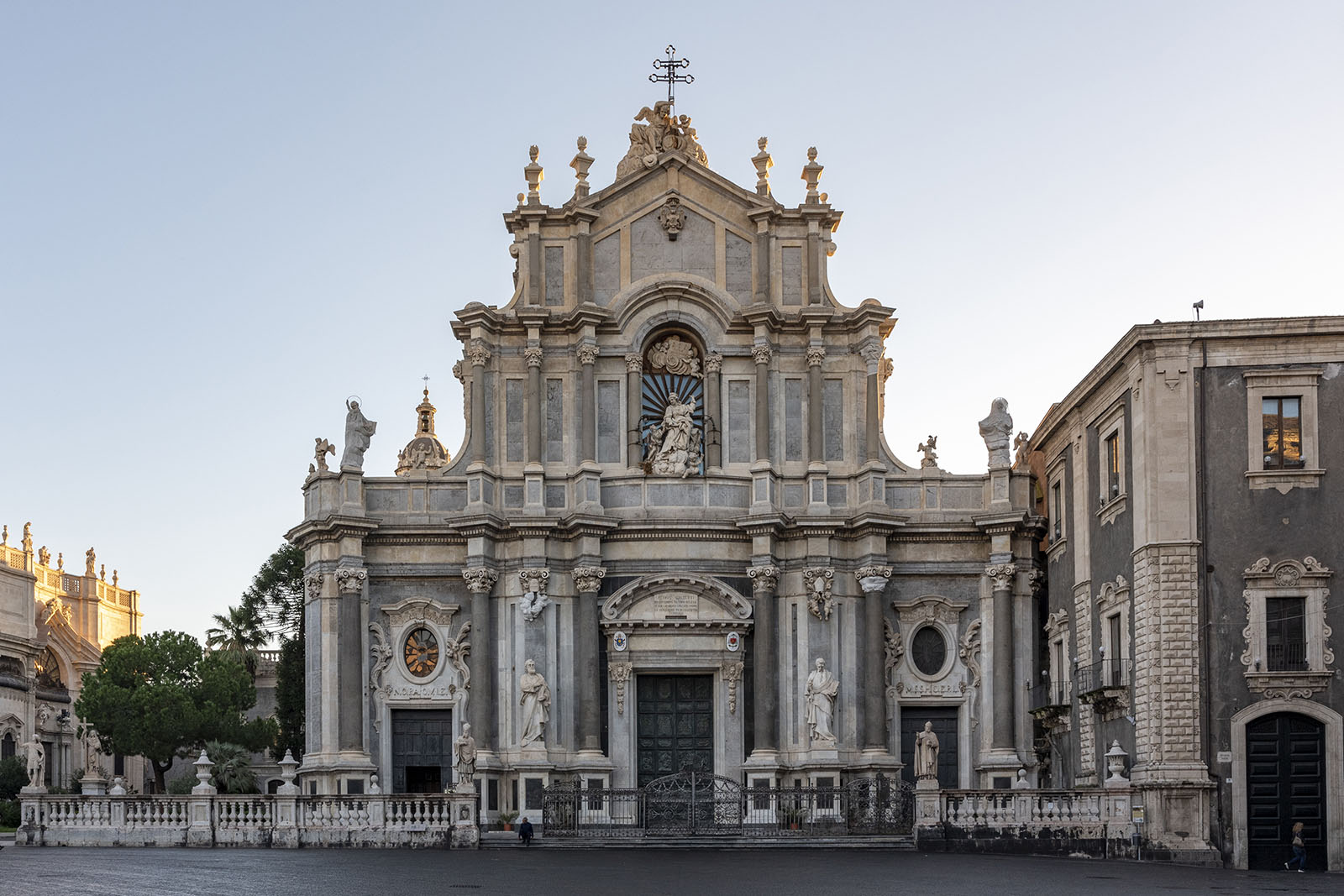
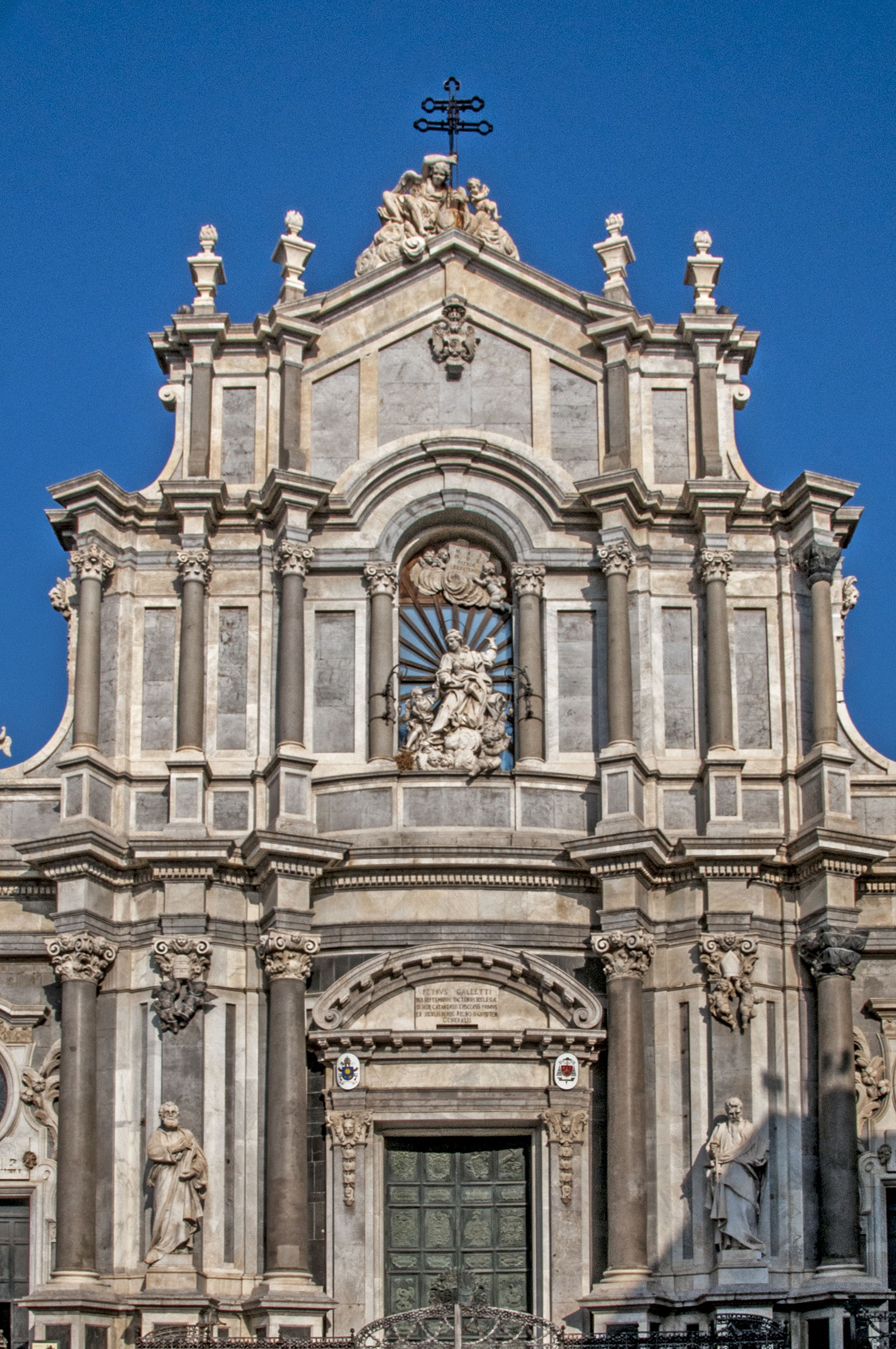
The cathedral of Sant’Agata overlooks the wide Piazza Duomo from which it is physically divided by a balustrade. After passing there is a churchyard to cross before you can access the interior of the basilica. The exterior has a facade that is divided into three floors: in the lower part are placed the main portal and the two sides, surmounted by large oval windows; in the center of the second floor there is a niche with the statue of Saint Agatha and the angels; closes the third and last floor closed by a triangular tympanum. For the facade the materials chosen were white limestone and gray lava stone. Together they create on the facade a geometric game where white often creates a frame around the black. In other cases the white highlights some architectural elements such as the capital or the base of the columns.

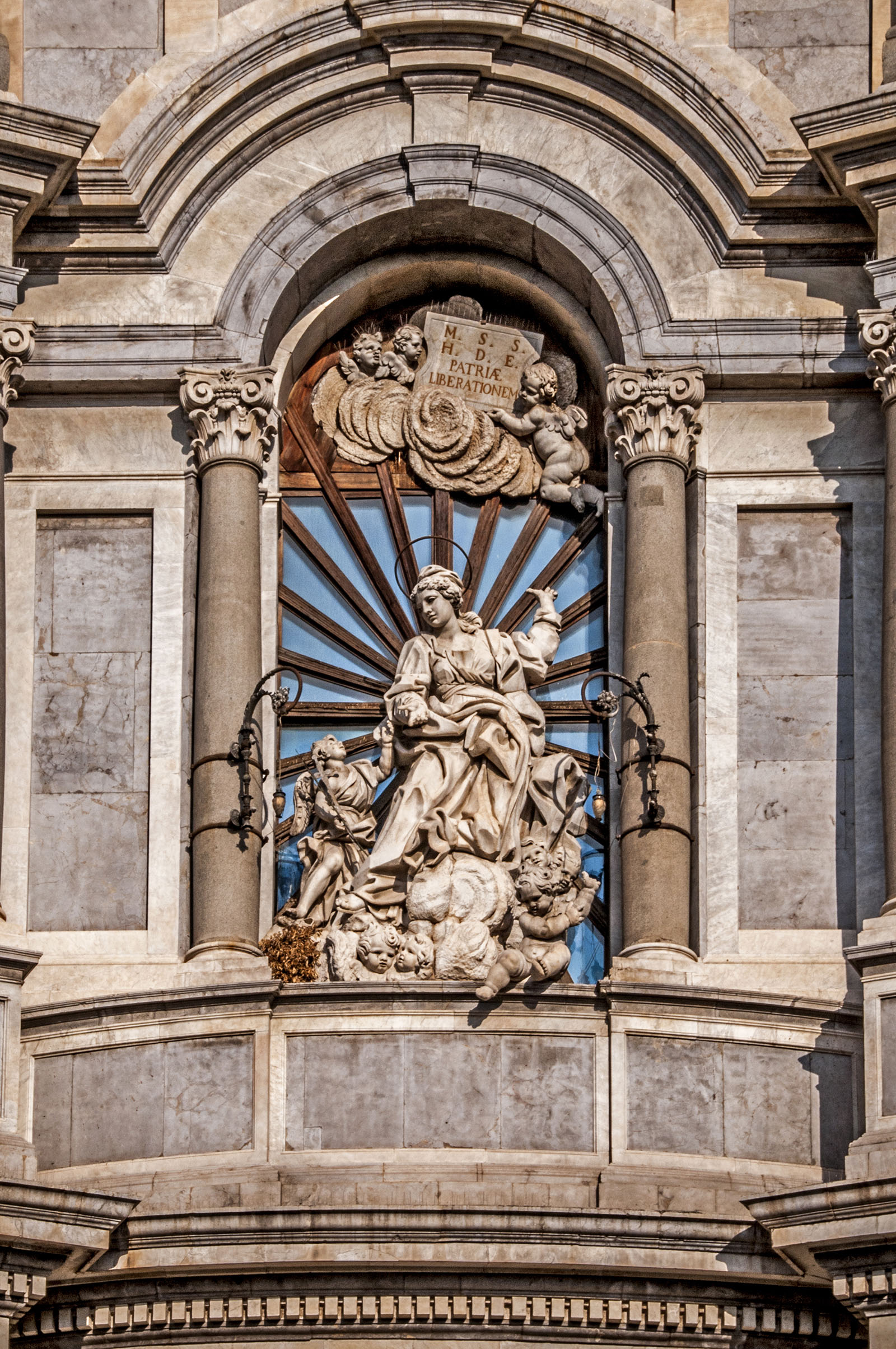
Grey lava stone and white marble were used, which, by alternating their use, bestow liveliness upon the façade. The façade is split into three levels: in the lowest part there are the main portal and two lateral portals, each surmounted by large oval windows; on the second level, in a niche , on a blue background with red beams, there is a white statue of St. Agatha and the angels; finally, a triangular tympanum completes the third level.



Cattedrale di Sant'Agata : foto prospetto ravvicinata Statua di Sant'Agata nella nicchia
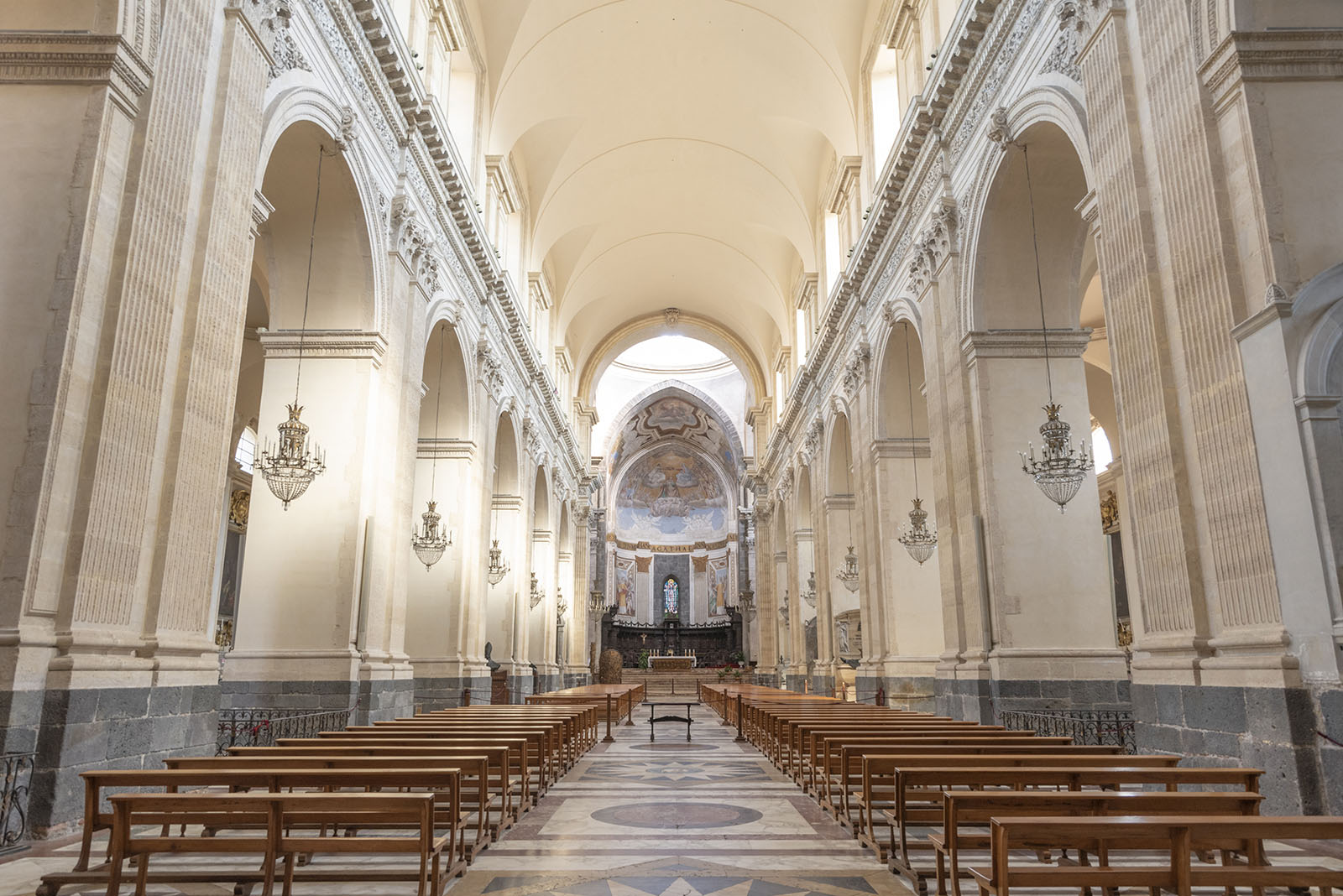
Colour also features inside the church. At the entrance, two pairs of red columns welcome visitors and a marble floor in various colours (red, green, yellow and white) leads worshippers to the altar.foto dall'ingresso verso l'altare, comprese coppie di colonneThe church has a Latin cross plan and is divided into three naves by large limestone pillars with a grey lava stone base. This adds brightness to the whole room, which is amplified by light coming in through the windows of the nave.
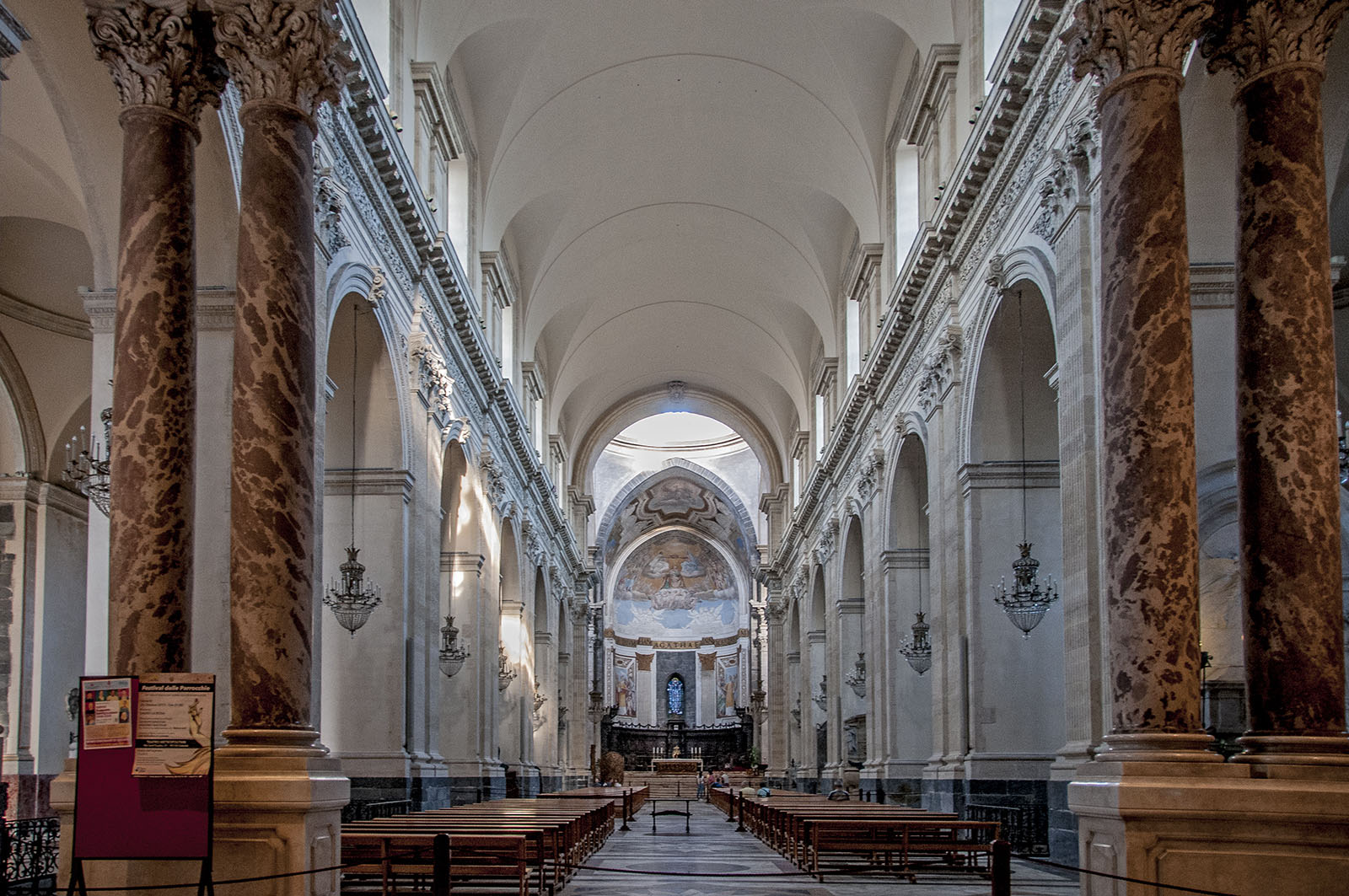
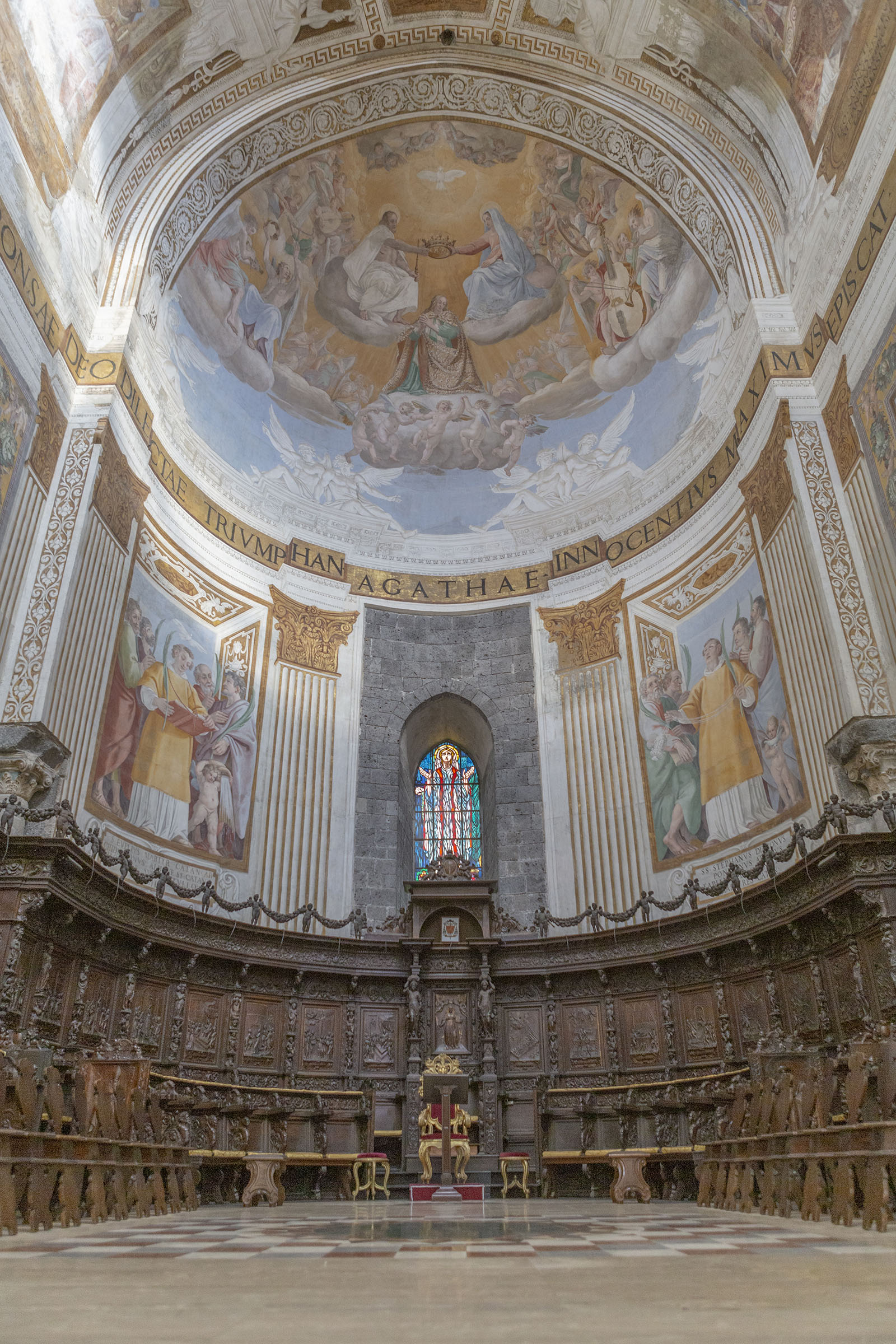
At the end of the church you can admire the decorations on the main apse by painter Giovanni Battista Corradini, who painted the Trionfo di Sant’Agata (Triumph of St. Agatha).
The Baroque town by the sea

The interior and its masterpieces

A colourful floor

The Maiolica of the staircase

The senses tell the story of the Church of San Giovanni Evangelista

The theatre of taste

Fontana della Ninfa Zizza, public water in the town

Feasting in Palazzolo

The senses tell the story of the church of San Giovanni Battista

The senses tell the story of the Church of San Sebastiano

The two churches

The chocolate of Modica

Many owners, one palace

Searching for colour

The Supernatural dimension of the chapel of the Santissimo Sacramento

Garden of Novices and the restorations by Giancarlo De Carlo

A new palace for the La Rocca lords

A prominent church

The Benedictine Monastery, one of the largest in Europe

The church of Carmine

The senses tell the Mother Church of San Nicolò and of the Santissimo Salvatore

San Benedetto: a treasure reopened to the public

The senses tell the Benedictine Monastery and San NicoIò l’Arena

The senses tell the story of the Church of San Giuliano ai Crociferi

St. Sebastian, so much work!

The senses tell about Palazzo Nicolaci

A talking palace

An eagle-shaped city

A feast only for Scicli

The Barresi-Branciforte lords

The role of the religious orders in rebuilding the Val di Noto

The senses tell about Palazzo La Rocca

Between white and black

The senses tell the story of the Church of the Annunciation

The senses tell the story of the church of San Giuseppe

A design by Vincenzo Sinatra

The senses tell the story of the Church of Santa Chiara

The colours of the cathedral

The senses tell the story of the Church of San Benedetto

One city, two sites

A miniature city

The cathedral of Sant’Agata: a lengthy reconstruction

A hall for the feasts

San Nicolò l’Arena: an unfinished church

St. Agatha and the giant candelabras

A museum to save a tradition

A long reconstruction

A city in colour

A small room with a golden entrance

Baroque and the loss of equilibrium in the 16th century

The senses tell the story of the church of Santa Maria del Carmelo

Freedom of worship and the role of the Catholic Church in the diffusion of Baroque

Discovering the mother church

Wonderful quick decorations

From the contrast of the exterior to the internal jubilation of colours

A new site for a new church

Church of San Giuliano (St. Julian) on Via dei Crociferi: reconstruction

Rosario Gagliardi, the maestro of the Val di Noto

A half-Baroque church

Places of knowledge: the Benedictines’ library

The Feast of San Giacomo (St. James)

From St. Thomas to St. Joseph

The Staircase of Angels

The senses tell the story of the Church of Santa Chiara

Limestone, the colour of harmony

The character of Badia Sant’Agata

Some prestigious works

A new site for a new city

The city of museums

The senses tell the story of the staircase of Santa Maria del Monte

Some masterpieces

The senses tell about Palazzo Napolino Tommasi Rosso

New roads for Catania

A triumph of colour

Militello, the story of an enlightened fiefdom

Two illustrious patron saints

A Nobel Prize in Modica

The kitchen, a treasure chest of colours

Corbels: a celebration of the Nicolaci family

Prominent façade

Palazzo Nicolaci di Villadorata, who is the architect?

From International Gothic to present day

Connections with other UNESCO sites

The senses tell the Cathedral of Sant’Agata

The façade used as a puppet theatre

A square as the heart of the city

The Burgos crucifix

A symbol for the town

The internal colours

Norman apses

The disastrous earthquake

One city, three sites

Modica, a city with ancient origins

A majestic and luminous church

The senses tell the story of the Badia di Sant’Agata

The wall comes to life

Feast days

A new entrance for Santa Chiara (St. Claire)

The Infiorata, a feast of colours and flowers