Noto

The façade used as a puppet theatre

Thanks to a recent restoration, Palazzo Nicolaci can be appreciated in all its original beauty and is one of the symbols of Sicilian Baroque art. It was the city’s noble residence of the Nicolaci family and has four storeys: the ground floor was used for stables and storing food; the first floor was the piano nobile (main floor) where the Baron lived; the rest of the family stayed on the upper floor, and the attic was for the servants. portale d’accesso con balconeThe entrance portal is framed by two columns and is surmounted by a large balcony.
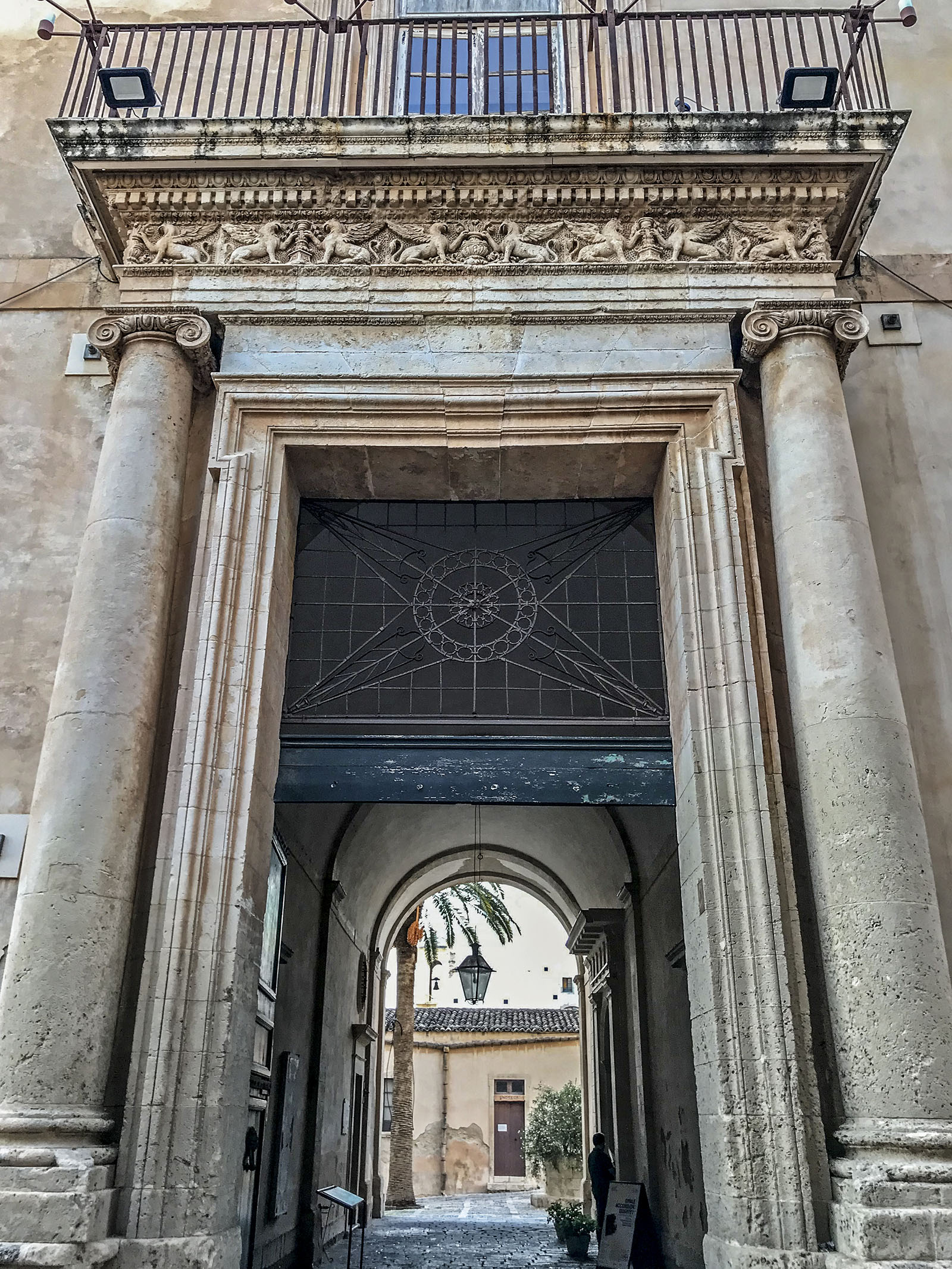
The façade is a street theatre reminiscent of the theatre of Sicilian puppets because of the masks and characters carved into it.

Anyone passing through Via Corrado Nicolaci is in awe of the incredible corbels . Five for each balcony, they depict mythological figures including mermaids, sphinxes and horses. Each corbel is richly decorated, almost as though in fear of leaving even the smallest of spaces free.

Such attention to decoration can be found in the cornices around the windows; they feature plant elements, human faces and masks.
As for the material used, it is the typical stone of Noto which turns a honey colour when hit by the sun and emits endless colours depending on the time of day.
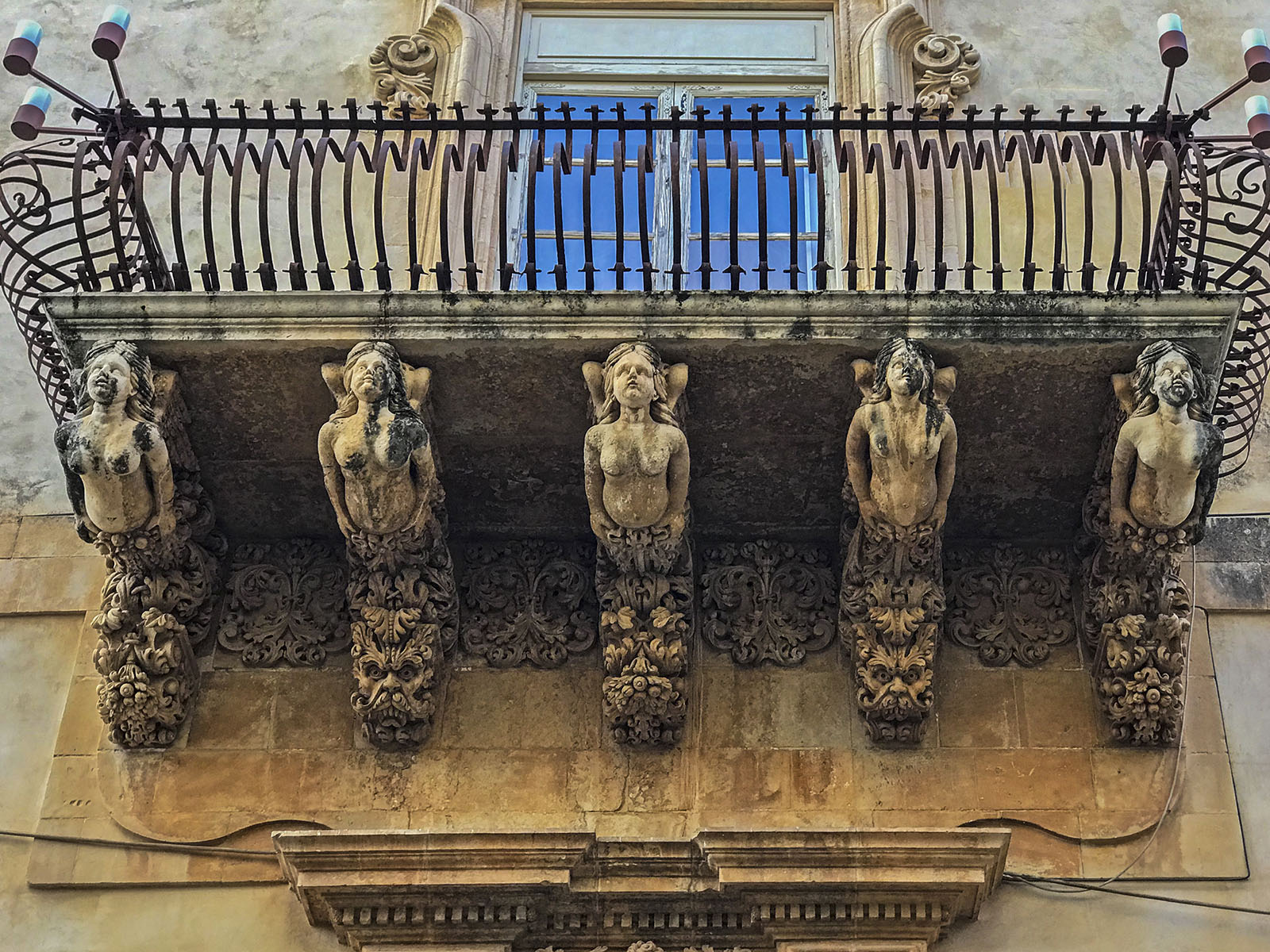
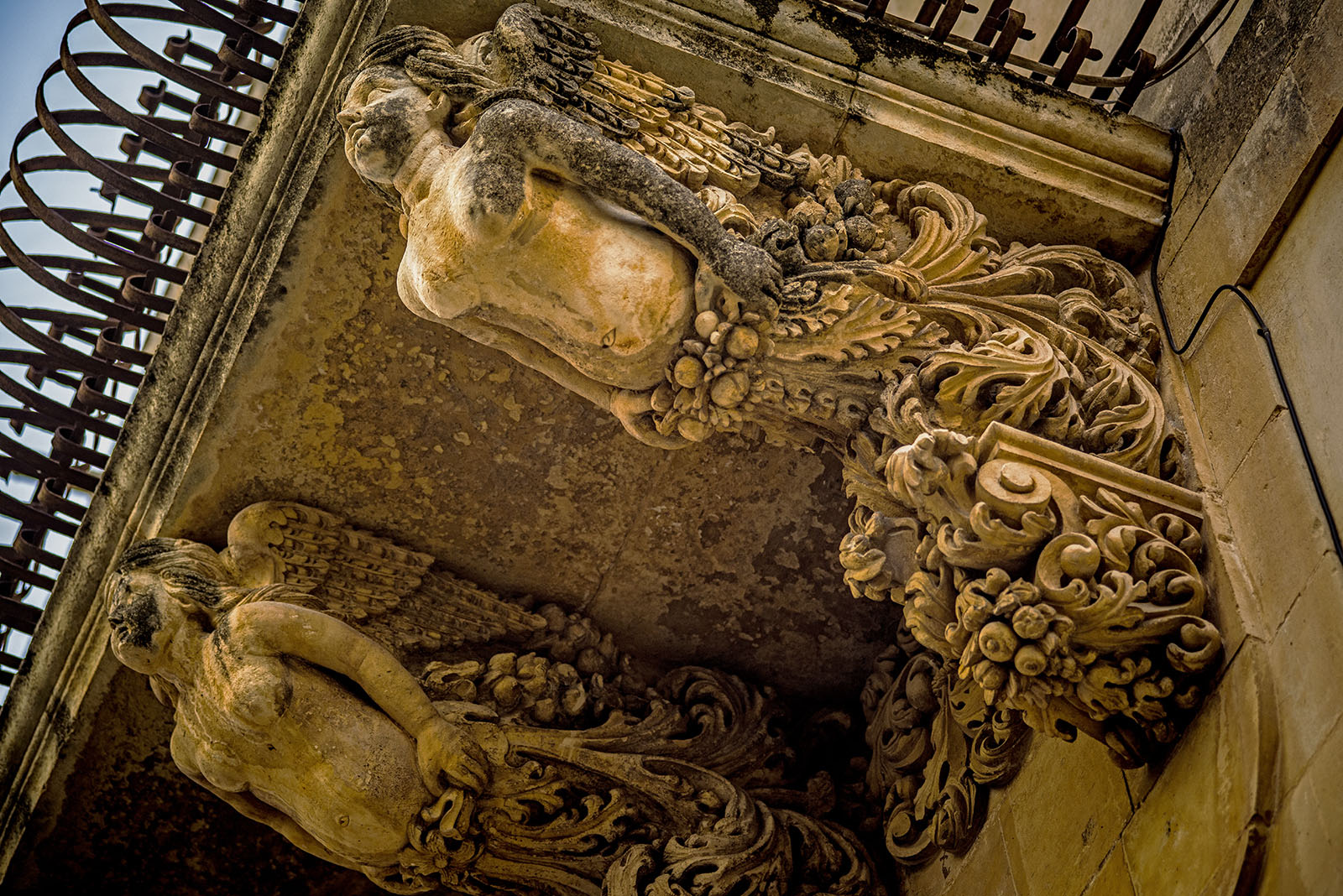
balcone, con finestra con sirene dettaglio sirena

The Infiorata, a feast of colours and flowers

Fontana della Ninfa Zizza, public water in the town

The Benedictine Monastery, one of the largest in Europe

The senses tell the story of the church of Santa Maria del Carmelo

The senses tell the story of the Church of San Giuliano ai Crociferi

One city, two sites

The internal colours

The senses tell the story of the church of San Giuseppe

The Maiolica of the staircase

Prominent façade

The façade used as a puppet theatre

From St. Thomas to St. Joseph

The senses tell the story of the Church of San Giovanni Evangelista

A feast only for Scicli

A new entrance for Santa Chiara (St. Claire)

The senses tell the story of the Badia di Sant’Agata

A small room with a golden entrance

The senses tell about Palazzo Nicolaci

A long reconstruction

Searching for colour

The senses tell the story of the church of San Giovanni Battista

Feasting in Palazzolo

The role of the religious orders in rebuilding the Val di Noto

The senses tell about Palazzo Napolino Tommasi Rosso

The senses tell the Cathedral of Sant’Agata

A colourful floor

A hall for the feasts

Discovering the mother church

The character of Badia Sant’Agata

The senses tell the story of the staircase of Santa Maria del Monte

Militello, the story of an enlightened fiefdom

St. Agatha and the giant candelabras

The cathedral of Sant’Agata: a lengthy reconstruction

Baroque and the loss of equilibrium in the 16th century

A miniature city

The Burgos crucifix

The Barresi-Branciforte lords

From International Gothic to present day

A square as the heart of the city

The senses tell the story of the Church of the Annunciation

A design by Vincenzo Sinatra

The Baroque town by the sea

An eagle-shaped city

A majestic and luminous church

The disastrous earthquake

Between white and black

A Nobel Prize in Modica

Some prestigious works

The Staircase of Angels

The Supernatural dimension of the chapel of the Santissimo Sacramento

The church of Carmine

The theatre of taste

Connections with other UNESCO sites

Modica, a city with ancient origins

A symbol for the town

Church of San Giuliano (St. Julian) on Via dei Crociferi: reconstruction

The two churches

San Nicolò l’Arena: an unfinished church

San Benedetto: a treasure reopened to the public

The senses tell the story of the Church of San Benedetto

Limestone, the colour of harmony

A new site for a new city

The senses tell about Palazzo La Rocca

The interior and its masterpieces

A city in colour

A new palace for the La Rocca lords

Freedom of worship and the role of the Catholic Church in the diffusion of Baroque

The colours of the cathedral

The senses tell the story of the Church of Santa Chiara

A talking palace

A half-Baroque church

New roads for Catania

The city of museums

St. Sebastian, so much work!

A triumph of colour

The senses tell the Benedictine Monastery and San NicoIò l’Arena

The senses tell the story of the Church of Santa Chiara

One city, three sites

Many owners, one palace

The Feast of San Giacomo (St. James)

The wall comes to life

Wonderful quick decorations

Two illustrious patron saints

Places of knowledge: the Benedictines’ library

Some masterpieces

The chocolate of Modica

Garden of Novices and the restorations by Giancarlo De Carlo

The senses tell the Mother Church of San Nicolò and of the Santissimo Salvatore

Norman apses

The kitchen, a treasure chest of colours

Feast days

A new site for a new church

From the contrast of the exterior to the internal jubilation of colours

A museum to save a tradition

Palazzo Nicolaci di Villadorata, who is the architect?

Corbels: a celebration of the Nicolaci family

A prominent church

The senses tell the story of the Church of San Sebastiano

Rosario Gagliardi, the maestro of the Val di Noto