Catania

The Church of St. Benedict

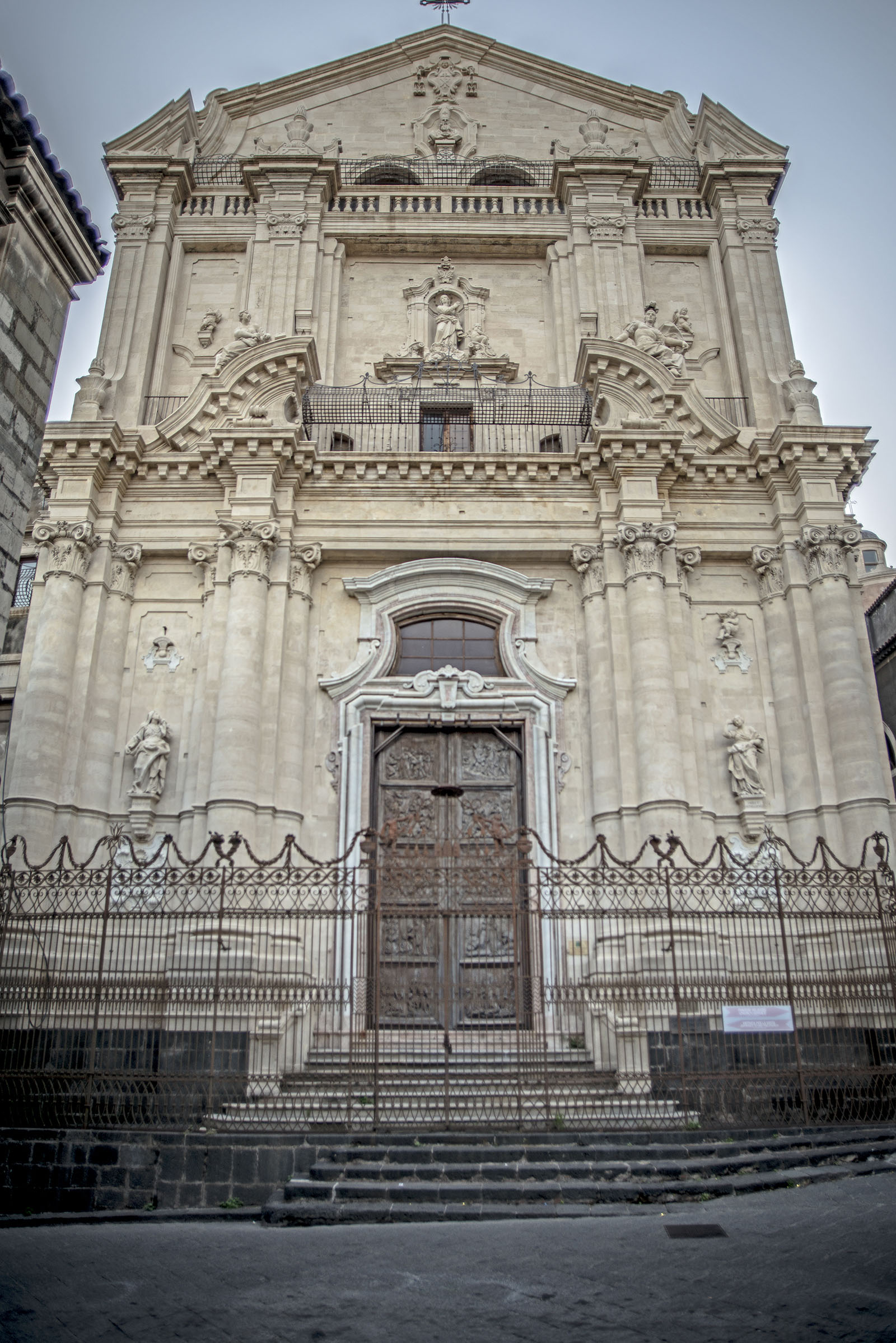
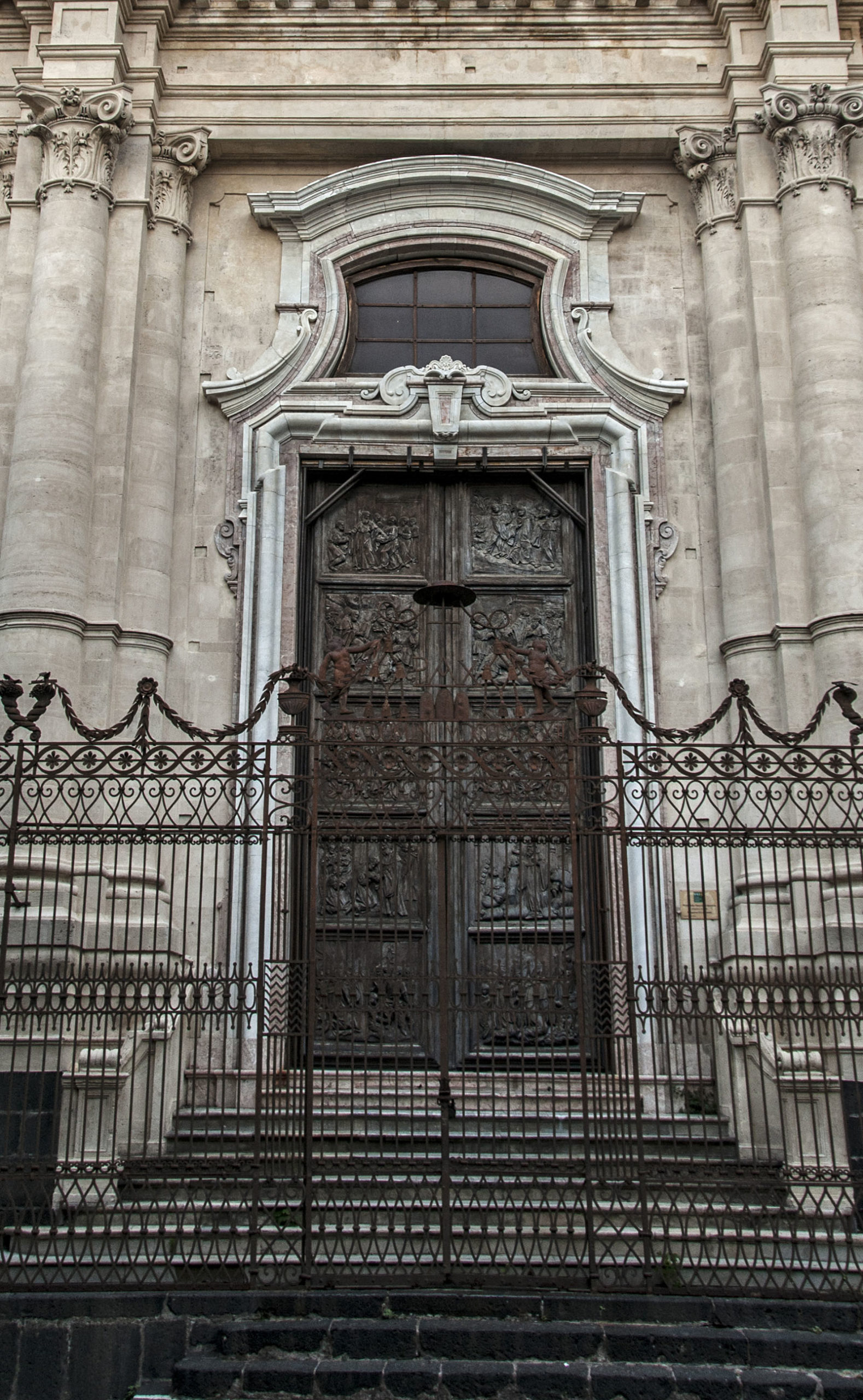
The façade of the church was built, during an initial phase, by the architect Alonzo di Benedetto from Catania and later enriched and completed by the portal created by the architect Vaccarini .

scalinata dal basso verso l'alto portale scolpito in legno
The building’s façade is characterised by a strong three-dimensionality, especially in the first level, set out by the articulation of the four columns that seem to project from the façade, increasing its size.
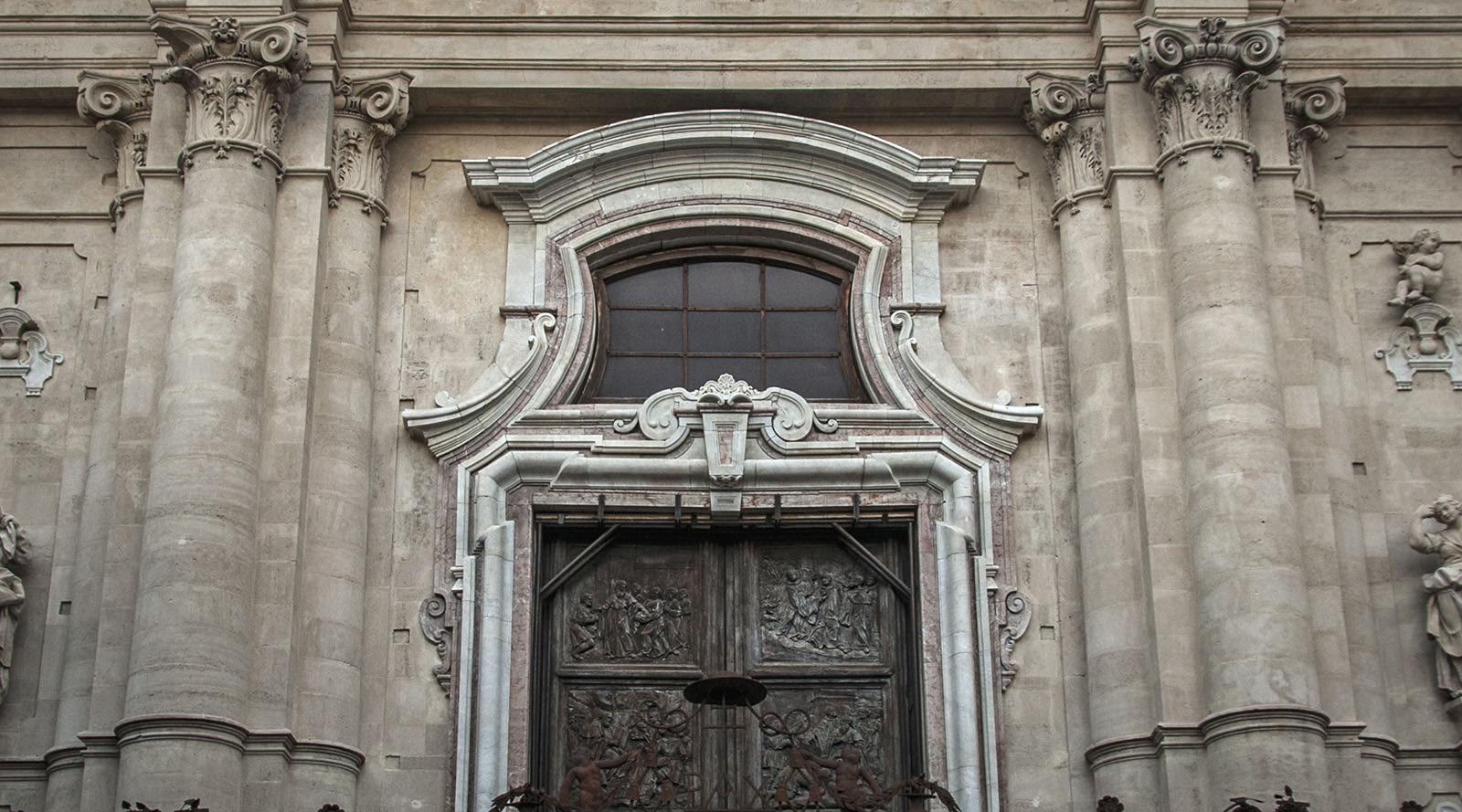
materiale da cui è composta, stucco marmorino
The trabeation and the broken tympanum are also impressive and the highly pronounced dentils emphasise the chiaroscuro effect.
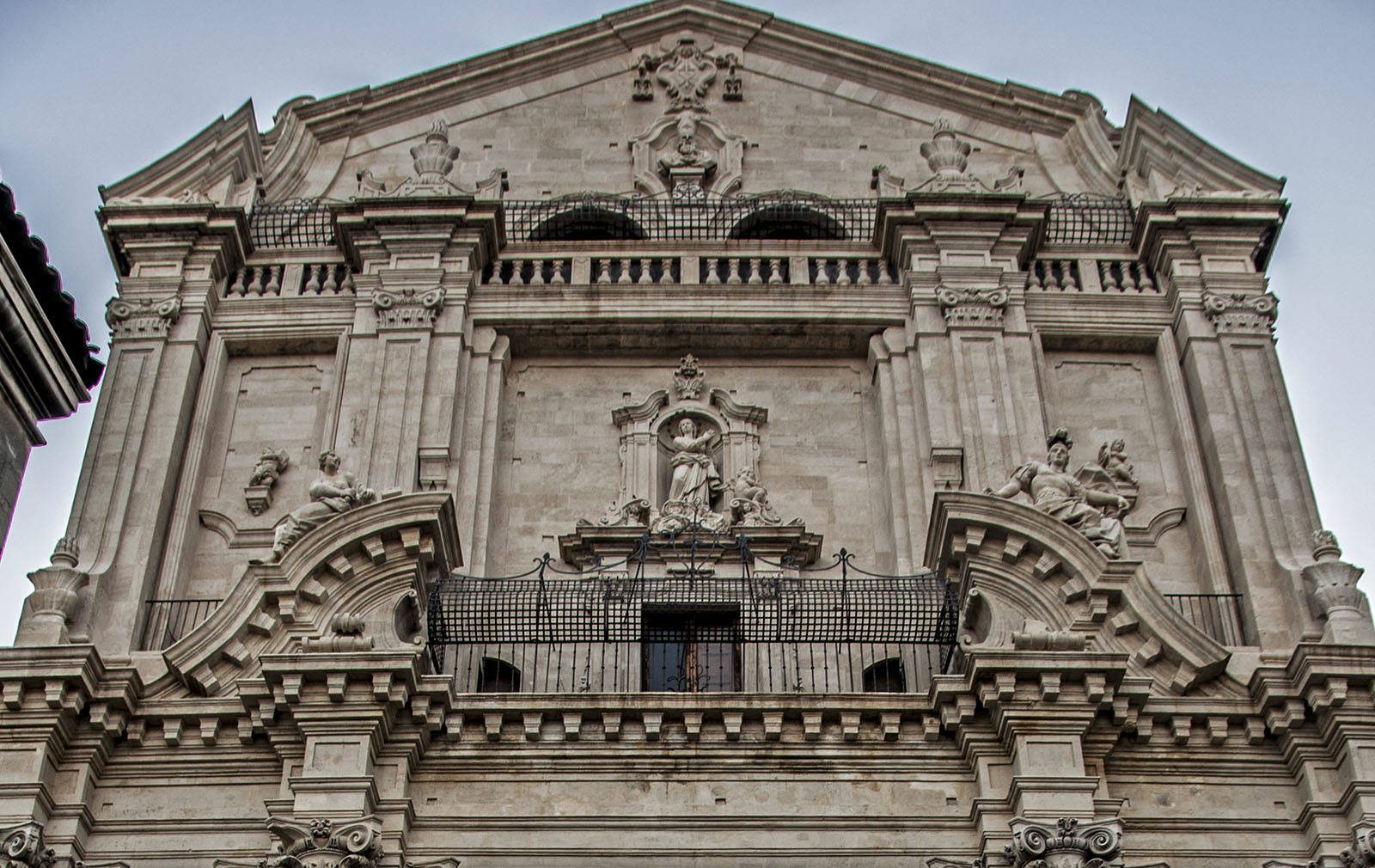
dettaglio statue angeli
The church entrance is preceded by an elegant vestibule with a staircase leading to the only internal nave illuminated by light from six large windows on the vault and light radiating from sumptuous candlesticks.

The floor, dating back to the late 17th century, is in polychrome marble and was recovered from the ruins of the earthquake. As you look upwards, your gaze is entranced by one of the most scenic vaults of Sicilian Baroque, frescoed by the Messina-born painter Giovanni Tuccari between 1726 and 1729. The vault is divided into three sections: the right side depicting scenes from the life of St. Benedict of Nursia, the left side and the central frescoes.
The central part of each window features elements called lunettes, also frescoed with female figures.
The rich central altar was executed between 1792 and 1795 and is composed of precious hard stones, such as Sicilian jasper, considered one of the most valuable materials used in the Baroque period, while the other details are in stamp silver and pure Venetian gold.

The Church of St. Paul

The new roads of the city

The illusion of light and the decorative splendour

The Church of St. Benedict

The senses tell the story of the Church of the Badia di Sant’Agata

The senses tell the story of the Church of San Benedetto

Scicli, the city of Baroque scenery

The city within the city

Expanded spaces, stucco and colourful lights

Expansion, spatiality and light in the church of San Domenico

A casket of precious works

The Antonino Uccello Birthplace Museum

The Franciscan convent

The casket of austerity under the great dome

The interiors: diffused light and Byzantine relics

Rebirth and urban planning of the city of Noto

Verticality and dynamism of the façade of the Church of San Carlo

The interior and works of art

The senses tell of the Cathedral of San Pietro

A stone garden

The Church of St. Julian on Via dei Crociferi

Geometry and wonder in civic architecture in the Baroque of the Val di Noto

Virtuosity, decorations and altars

Baroque creativity: recurring themes

The smallest Greek theatre in the world

The Church of St. John the Evangelist

The senses tell the story of the Church of San Giuliano ai Crociferi

Baroque and the loss of balance in the 16th century

Altars, saints and sculptural works

The eagle-shaped city

A compromise between Neoclassicism and Baroque

The senses tell the story of the Sanctuary Church of Santa Maria della Stella

Palazzo Zacco, a balance between sobriety and decoration

A story of rebirth

The Badia di Sant’Agata (St. Agatha’s Abbey)

Reconstruction after the earthquake

The senses tell the Church of San Domenico

The senses tell the Cathedral of Sant’Agata

Fountain of the Nymph Zizza: public water in the town

The works in the church

The Staircase of Angels

The Madonna dei Conadomini and the art of devotion

The palace, the town, the church

Palazzo Trigona: a building with a complex shape

The Monastery of the Benedictine nuns

The church and the monastery

The senses tell the story of the Church of Santa Maria del Monte

Akrai and Syracuse: an unbreakable bond

Barresi-Branciforte: the lords of the fiefdom and the modernisation of the town

The Benedictines’ library

Piazza Duomo, the elephant fountain, the heart of the city

The Monte delle Prestanze in the new city layout

Garden of Novices and the restorations by Giancarlo De Carlo

The senses tell about Palazzo Ducezio

The Infiorata of Noto, a modern tradition

Palazzo della Cancelleria: from former stable to the Nicastro family

The articulated interior spaces

From the end of the world to rebirth from the rubble

The senses tell the story of the Church of San Carlo and the former Jesuit college

The city palace

The senses tell about Palazzo Beneventano

The Church of St. Francis

Scenography and devotion for St. Agatha

Art in the cathedral

The beginning of an authentic Baroque conception

The senses tell the story of the Church of San Giovanni Evangelista

Religious architecture

The expansion of space and changing reality

The Palazzo dei due mori

The freedom of worship and the Catholic Church’s role in the diffusion of Baroque

The neo-Gothic seminary chapel: symbols, light and space

The senses tell the Benedictine Monastery and the Church of San Nicolò l’Arena

The Duomo di San Giorgio (Cathedral of St. George)

The interior of the church: space and colour

City and nature

A heritage of votive works

The senses tell the Cathedral of San Giorgio

The church of San Nicolò l’Arena: the majesty of an unfinished beauty

Palazzo Trigona di Canicarao

Views denied, views conquered: the power of the devout Benedictines

The senses tell the story of the Church of San Paolo

Madonna of the Militia: a singular warrior virgin

Scenography, lights and colours of the cathedral

The dynamics of the Church of San Michele

Majestic exteriors, grandiose interiors

One city, three sites

Unusual iconographies: the Burgos crucifix

The city of Modica, a balance between nature and urbanism

The Church of Madonna della Stella

The Church of St. Mary of the Mountain

The senses tell about Palazzo Trigona

A new site for the church of San Giorgio

The senses tell the Church of San Michele

The church and the college

The senses tell about Palazzo Zacco

A Nobel Prize in Modica

A unifying project for the city of Catania

San Domenico and Gagliardi’s work

The senses tell the Cathedral of San Giorgio

St. Agatha and the candelore

The senses tell of Palazzo della Cancelleria

The art of maiolica

The triumph of Baroque: expansion of spaces

Luminous sacred spaces

Militello: The story of an enlightened fiefdom

The two churches