The climate of political, social and cultural renewal that had distinguished the reign of the Hauteville family was interrupted, at the end of the monarchy, by disagreements between Emperor
Frederick of Swabia
 and the Church of Cefalù. This caused a slowdown in the urban and economic growth of the city. The monastic orders and the feudal aristocracy became the new protagonists; the first, represented by the
Benedictine order
and the Church of Cefalù. This caused a slowdown in the urban and economic growth of the city. The monastic orders and the feudal aristocracy became the new protagonists; the first, represented by the
Benedictine order
 and
Franciscans settled
in different areas of the urban fabric. The Benedictine monastery of St. Catherine rose
and
Franciscans settled
in different areas of the urban fabric. The Benedictine monastery of St. Catherine rose 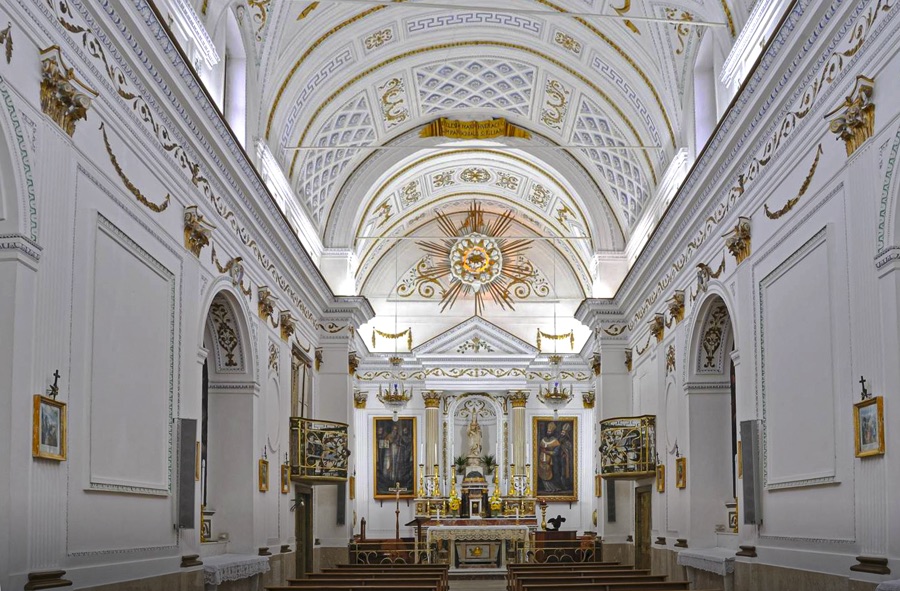 inside the walls, almost level with the great plain, opposite the cathedral, while the choice of the Franciscans was oriented outside the southern walls, with the 1225 construction of St. Francis’ convent, near the road leading to the city.
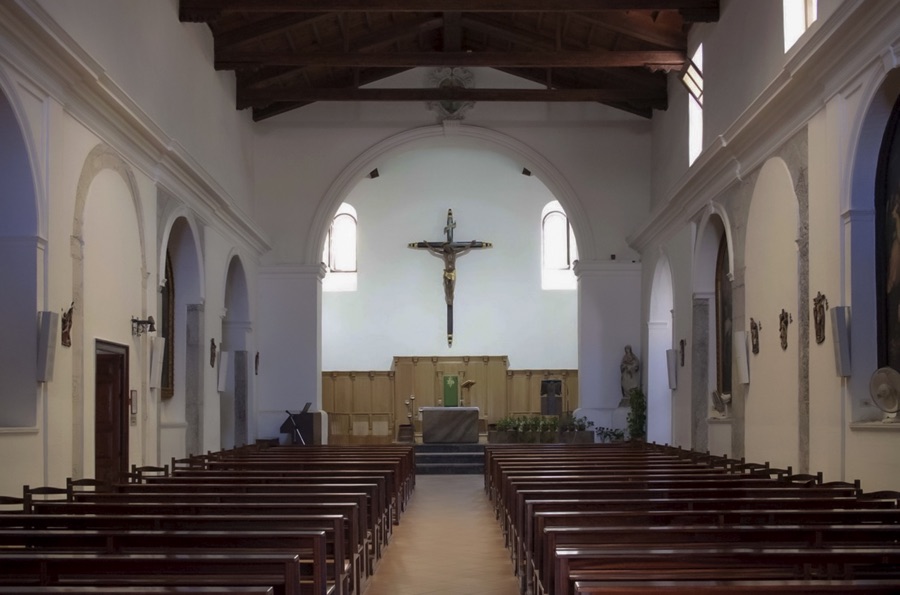 Shortly afterwards, towards the middle of the 13th century, Cefalù welcomed the ancient and influential noble family of Ventimiglia, who continued to be present in the Cefalù territory throughout the 14th century. The advent of the Ligurian aristocratic family undermined the role of the
civitas episcopal
Shortly afterwards, towards the middle of the 13th century, Cefalù welcomed the ancient and influential noble family of Ventimiglia, who continued to be present in the Cefalù territory throughout the 14th century. The advent of the Ligurian aristocratic family undermined the role of the
civitas episcopal
 and its power, to the point of wearing it down.
Deriving from the investment of conspicuous wealth from family properties in the neighbouring areas, the aforementioned undermining manifested itself through the building of their residence, the
hospicium magnum
 , located in a strategic area of the via regia, between the cathedral floor and the main gate. The complex, represented by the side street, which coincides with the present-day Via Amendola, can be seen in a drawing dating back to the 16th century, discovered during recent restoration work. Its peculiarity, which distinguished it from the typical feudal residences with a compact urban structure, was in the different typology that distinguished its settlement model, made up of several interconnected buildings, according to an architectural tradition present in Liguria during the 13th century. Nevertheless, the Ventimiglia family did not alter the urban scheme derived from the Norman re-foundation, but created a dialogue between the architectural layout of their buildings and that of the latter. However, the domus magna building shifted the attention from what, until then, was considered to be the centerpiece of the urban fabric, the Cathedral.
A new feudal secular axis of the complex, erected by the powerful family, was added to the bishop’s epicentre and remained unchanged for a long time.