The crown of mountains that surrounds Palermo and resembles the shape of a necklace was already found, in ancient times, in the
Greek - Phoenician language
 of the city’s ancient inhabitants, although the Greek and then Latin origins of the name, Panormos/Panormus, also include the meaning of a port with a deep anchorage, although this was not specifically attributable as it was also used for other sites.
As early as the 12th century, the flourishing vegetation of this vast plain’s landscape, coloured by the pink hues of the
lemon plants
 , the bright tones of the oranges and pomegranates, similar to the blazing streaks of timeless sunsets, was described in detail by
Ugo Falcando
, the bright tones of the oranges and pomegranates, similar to the blazing streaks of timeless sunsets, was described in detail by
Ugo Falcando
 .
.
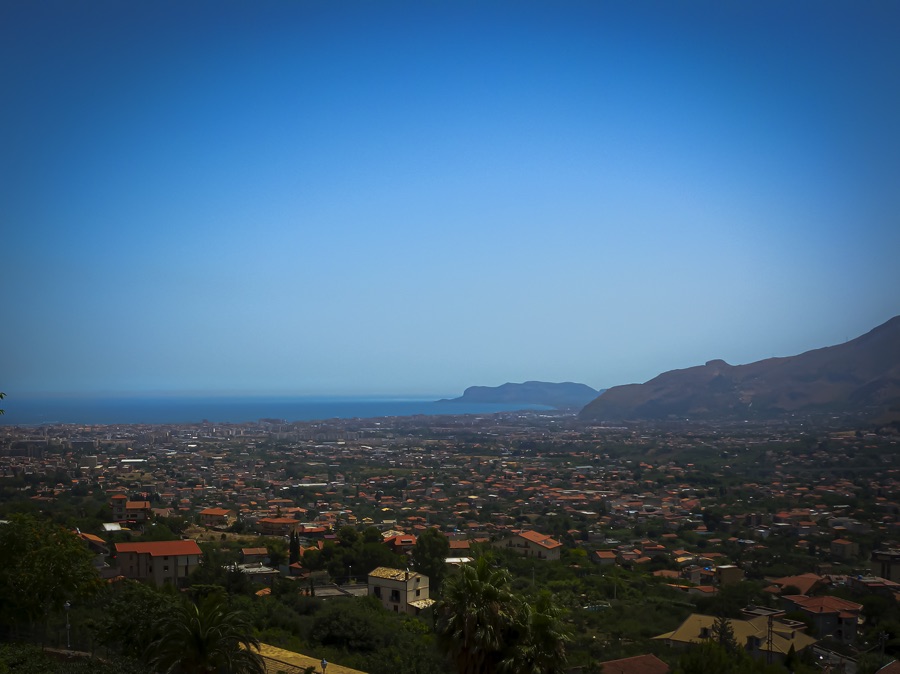 The combination of the term “
conca
” with the fertile plain, as well as a Baroque definition by the Jesuit
Giuseppe Mazara
The combination of the term “
conca
” with the fertile plain, as well as a Baroque definition by the Jesuit
Giuseppe Mazara
 , could refer to its iconographic representation in modern times in the shell in the
Genius of Palermo
, could refer to its iconographic representation in modern times in the shell in the
Genius of Palermo
 sculpture group in Palazzo Pretorio.
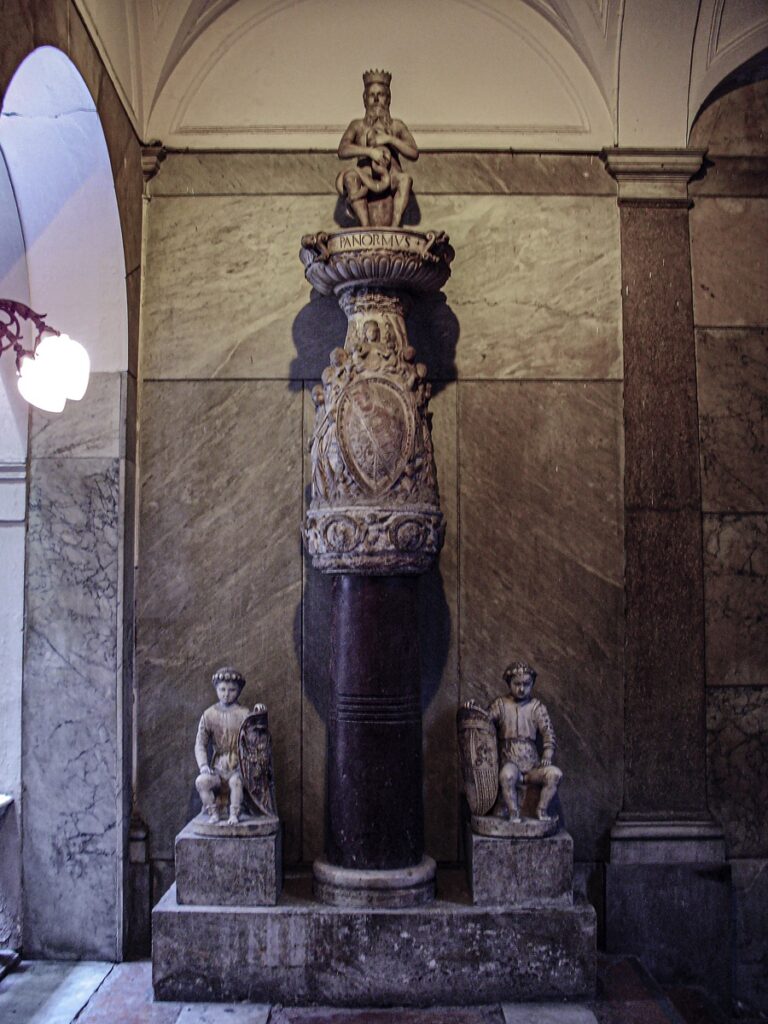 Going back in time, even the Arabic term
dāra
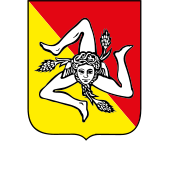
can be traced back to the ring of mountains that rises around the lush plain of Palermo, as if to protect it. Even from the adjectives in the local erudite locution “Panormus, Urbsfelix, Concha aurea”, the city seems to express both a link to the flourishing natural resources that surrounded it and a reference to the presumed gold sands of the Oreto river, whose very etymology derives from the presence of gold. The colour of this noble metal, associated with the royal purple-red, echoes the
heraldic tradition
Going back in time, even the Arabic term
dāra
can be traced back to the ring of mountains that rises around the lush plain of Palermo, as if to protect it. Even from the adjectives in the local erudite locution “Panormus, Urbsfelix, Concha aurea”, the city seems to express both a link to the flourishing natural resources that surrounded it and a reference to the presumed gold sands of the Oreto river, whose very etymology derives from the presence of gold. The colour of this noble metal, associated with the royal purple-red, echoes the
heraldic tradition
 already present in the Roman-Byzantine era and the
colour scheme
of the city of Palermo in the Islamic Middle Ages.
already present in the Roman-Byzantine era and the
colour scheme
of the city of Palermo in the Islamic Middle Ages.