 This is one of the largest and most dominant spaces of the late antiquity residence, with the function of connecting a number of rooms: as a place of passage to access the
basilica
This is one of the largest and most dominant spaces of the late antiquity residence, with the function of connecting a number of rooms: as a place of passage to access the
basilica
 , an axis of distribution for the main apartments and area of connection with the
triapsidal triclinium
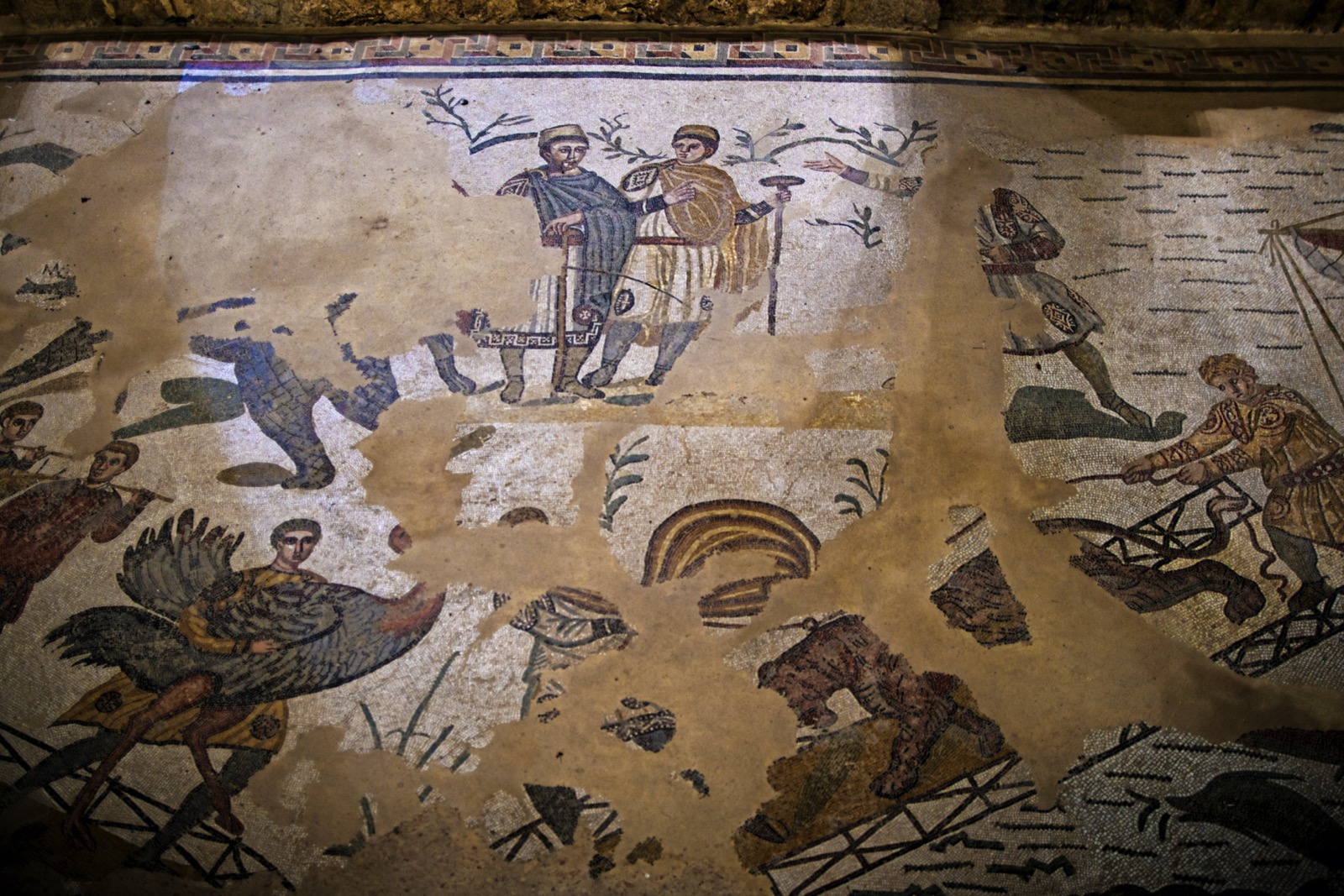
. The floor mosaic of the “Corridor of the Great hunt”, which is around 60 metres long, uses architecture and images to shows the social importance of the dominus.
, an axis of distribution for the main apartments and area of connection with the
triapsidal triclinium
. The floor mosaic of the “Corridor of the Great hunt”, which is around 60 metres long, uses architecture and images to shows the social importance of the dominus.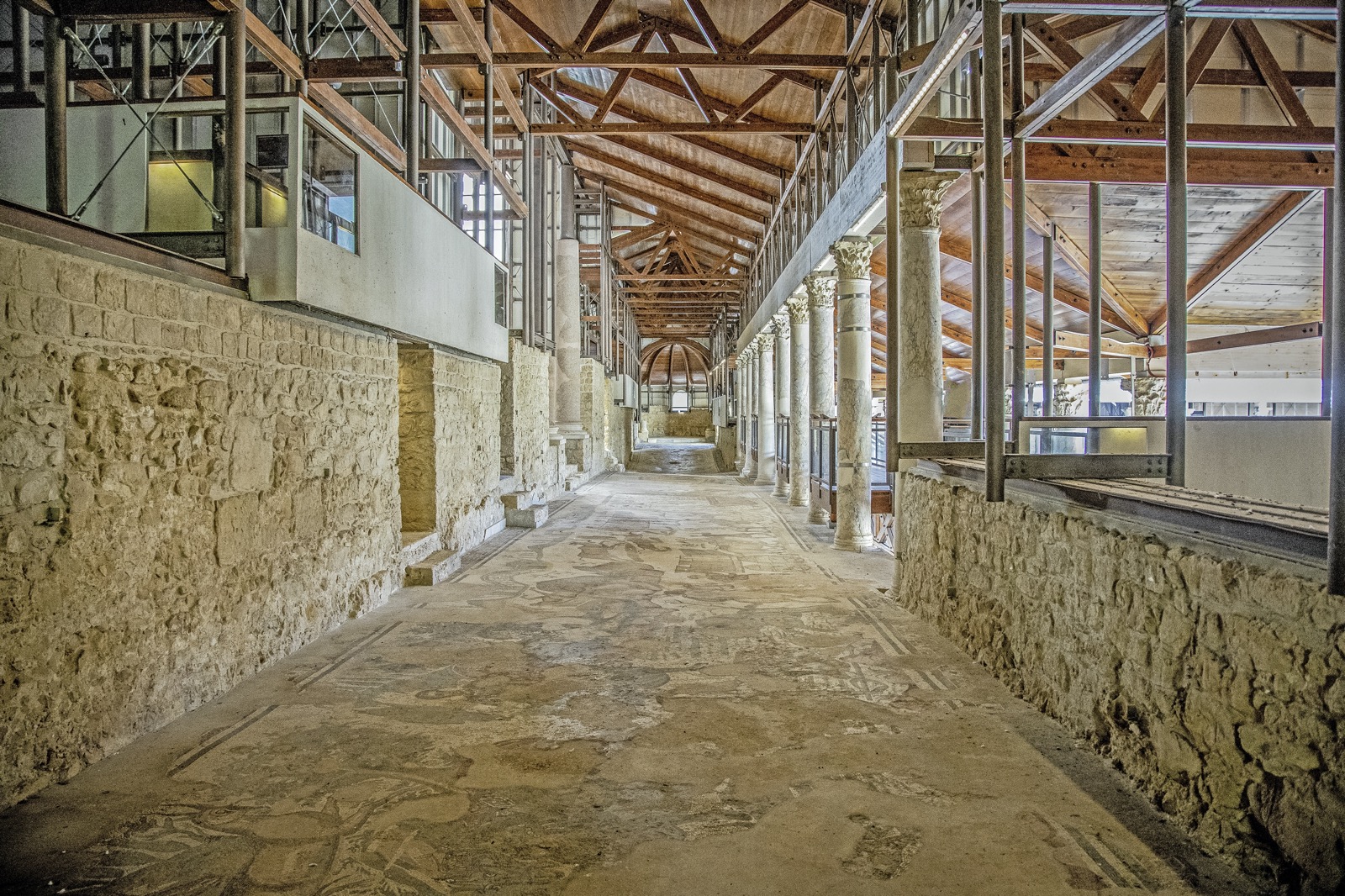 It is presented as a great hunting manual, and depicts the capture in the extreme regions of the Empire of exotic animals to be exhibited during the
venationes
It is presented as a great hunting manual, and depicts the capture in the extreme regions of the Empire of exotic animals to be exhibited during the
venationes
 , the shows in the Amphitheatre of Rome.
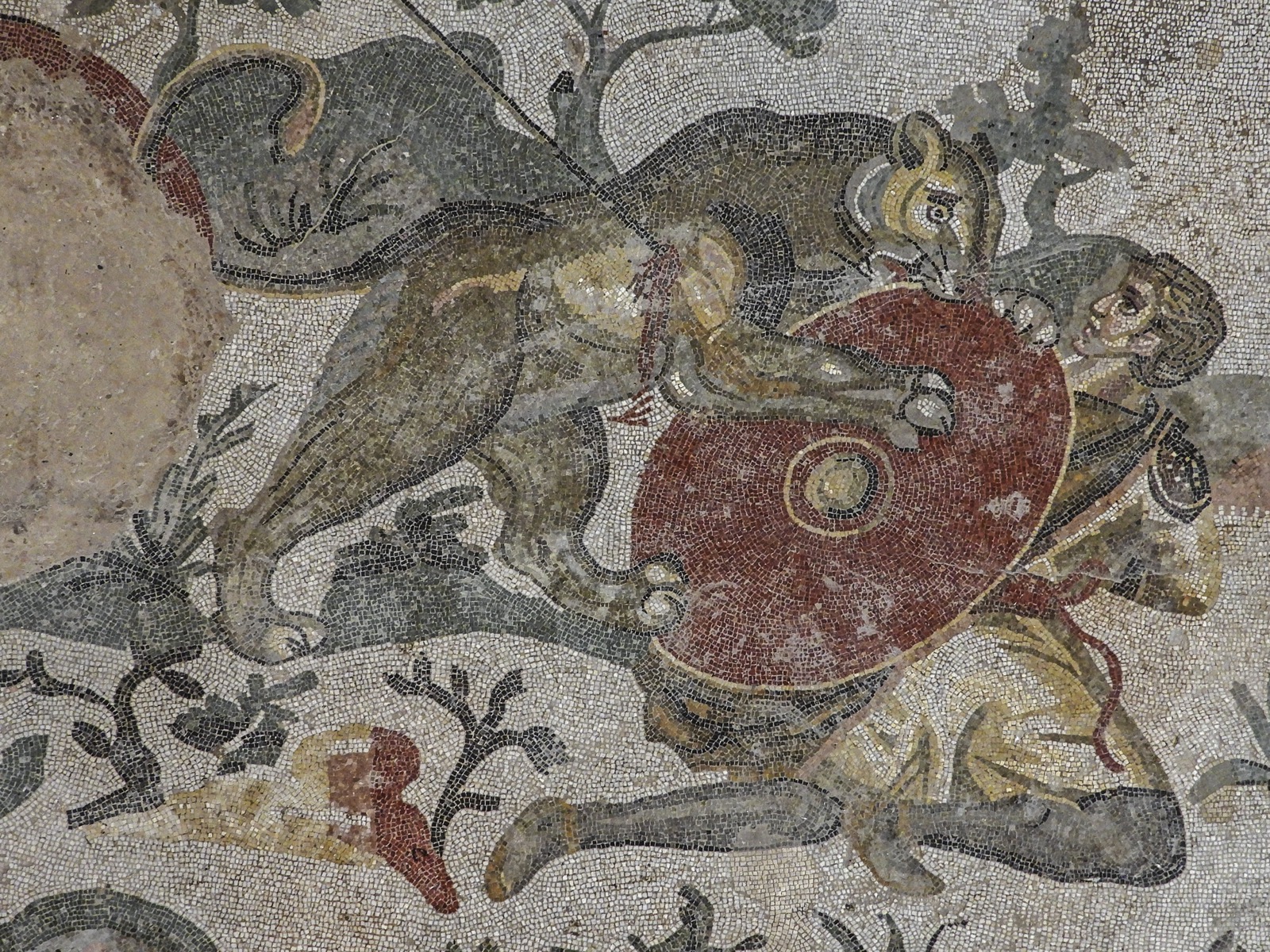 The mosaic composition is divided into seven scenes, split into three registers, with wild or urbanised landscape backgrounds, generic scenes focused, above all, on animal chases, and episodes of capturing and transporting wild beasts on boats bound for the capital, the centre of the Empire.
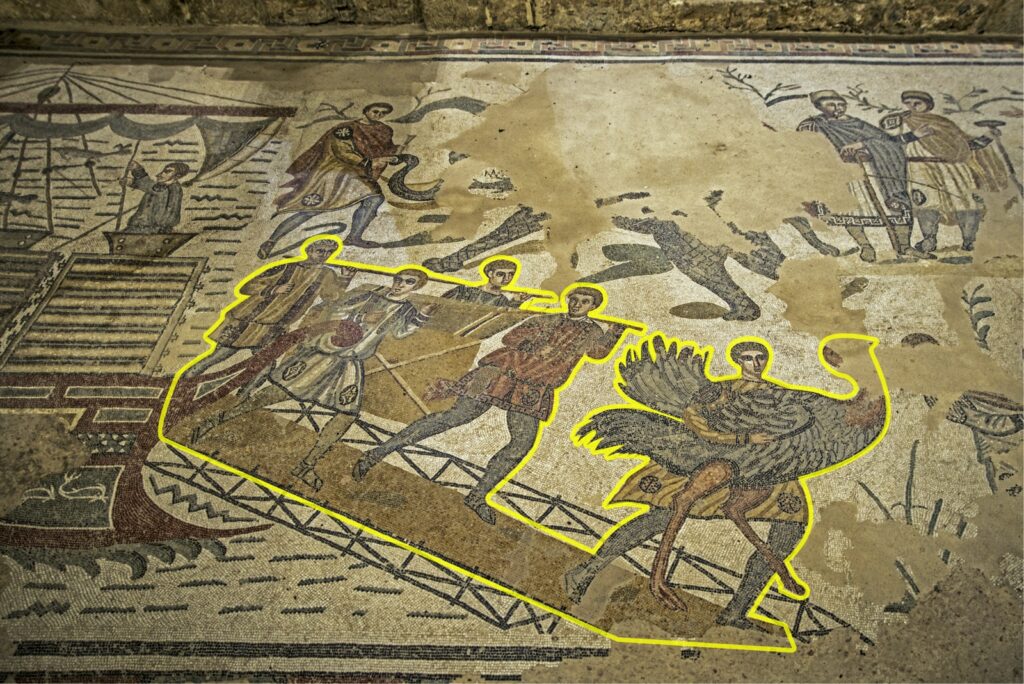
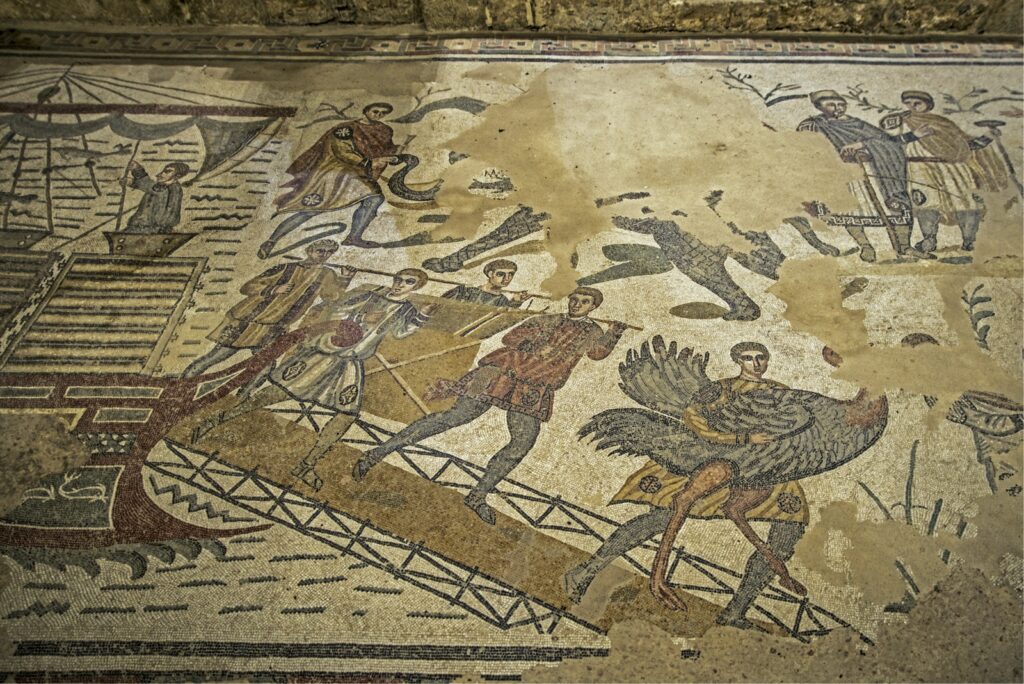
Unlike the Hall of the “Small Hunt”, no animal killings are represented.
The story takes shape from the north
apse
, occupied by the figure of Mauritania, 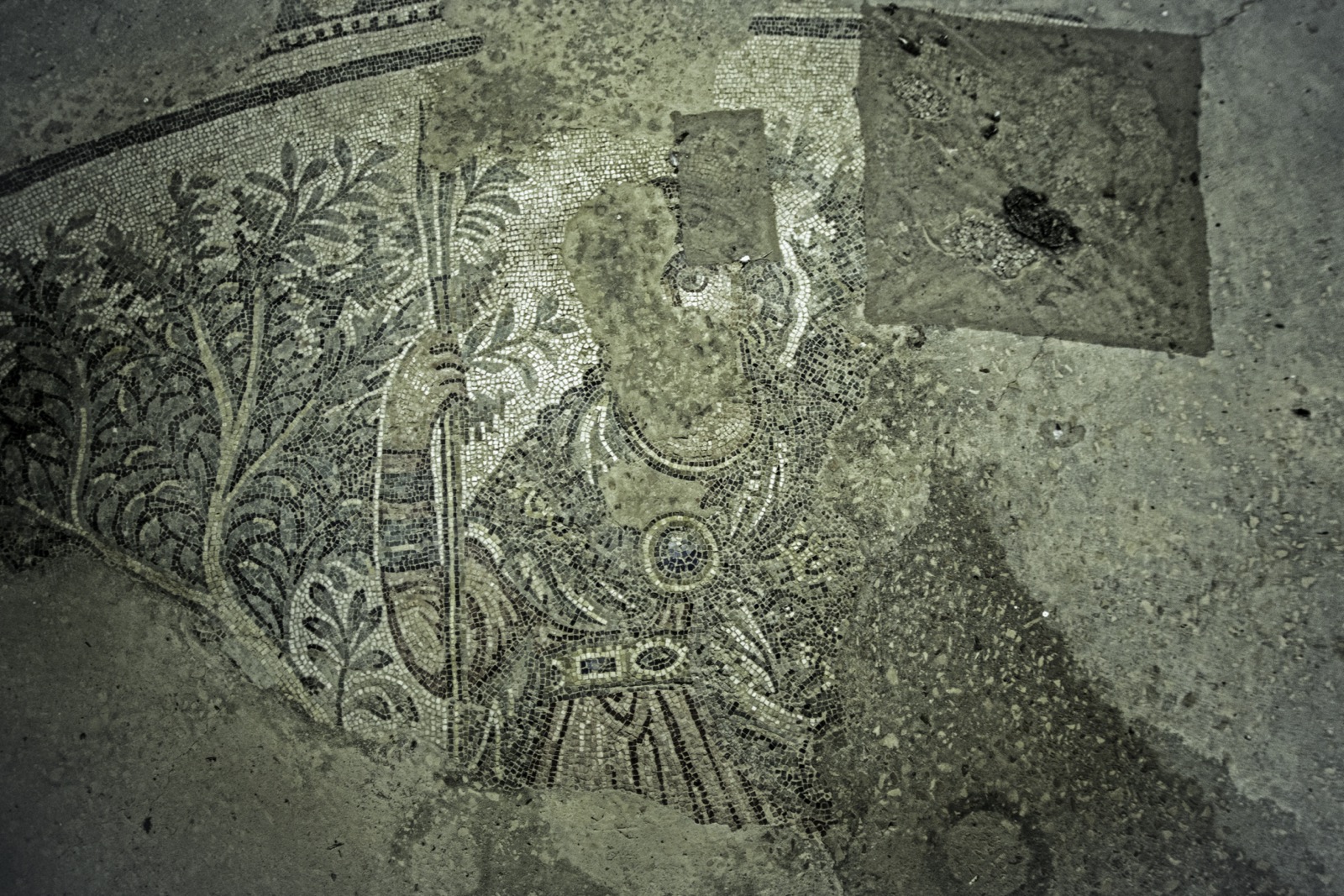 who with her thick dark hair introduces the capture of animals in the African provinces, ending in the south apse, with the personification of India or Ethiopia by an incense tree.
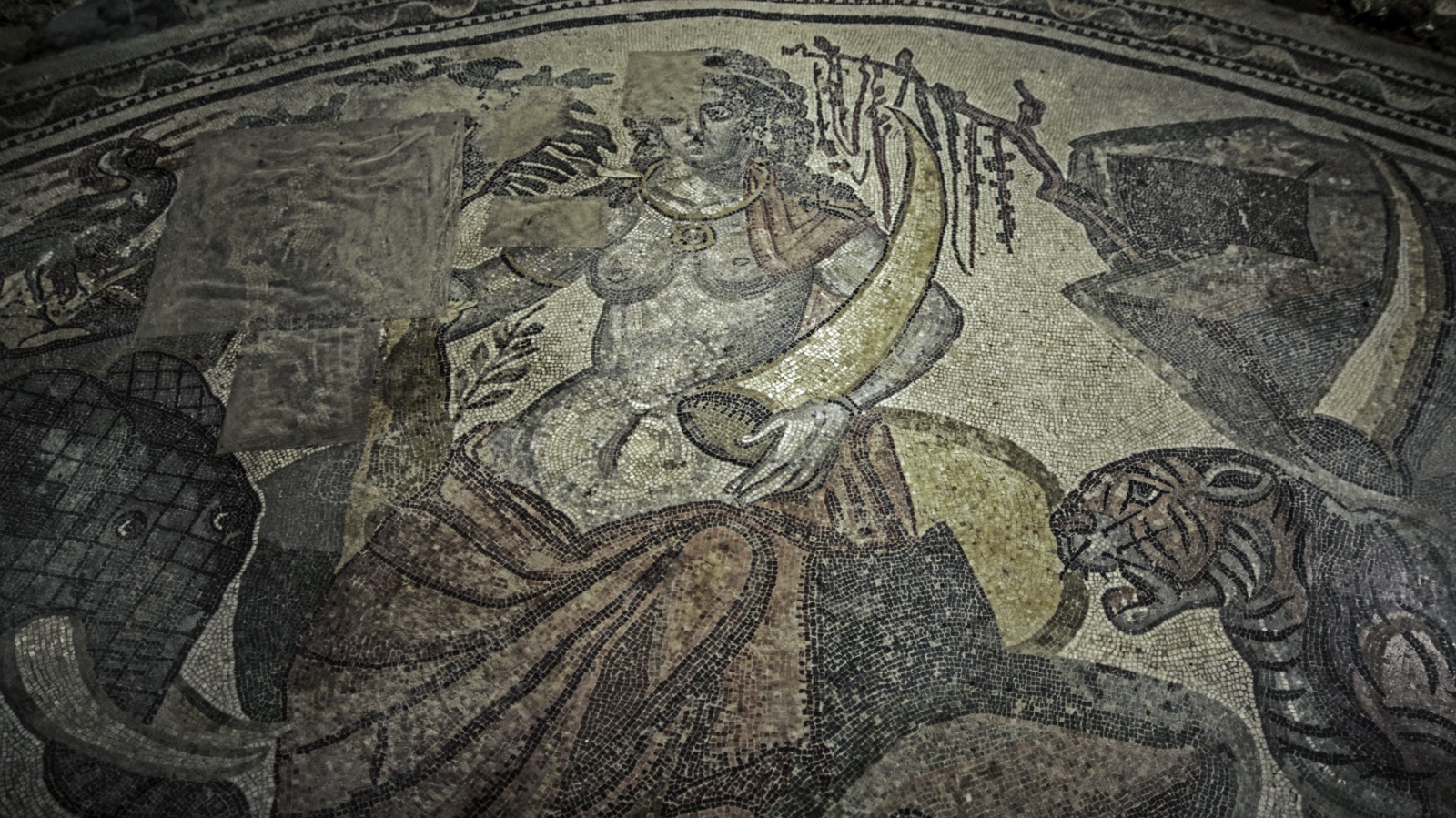 The description of the grandiose deployment of animals captured to be sent to Rome and coming from the farthest provinces and even from the mythological universe, such as the griffin,
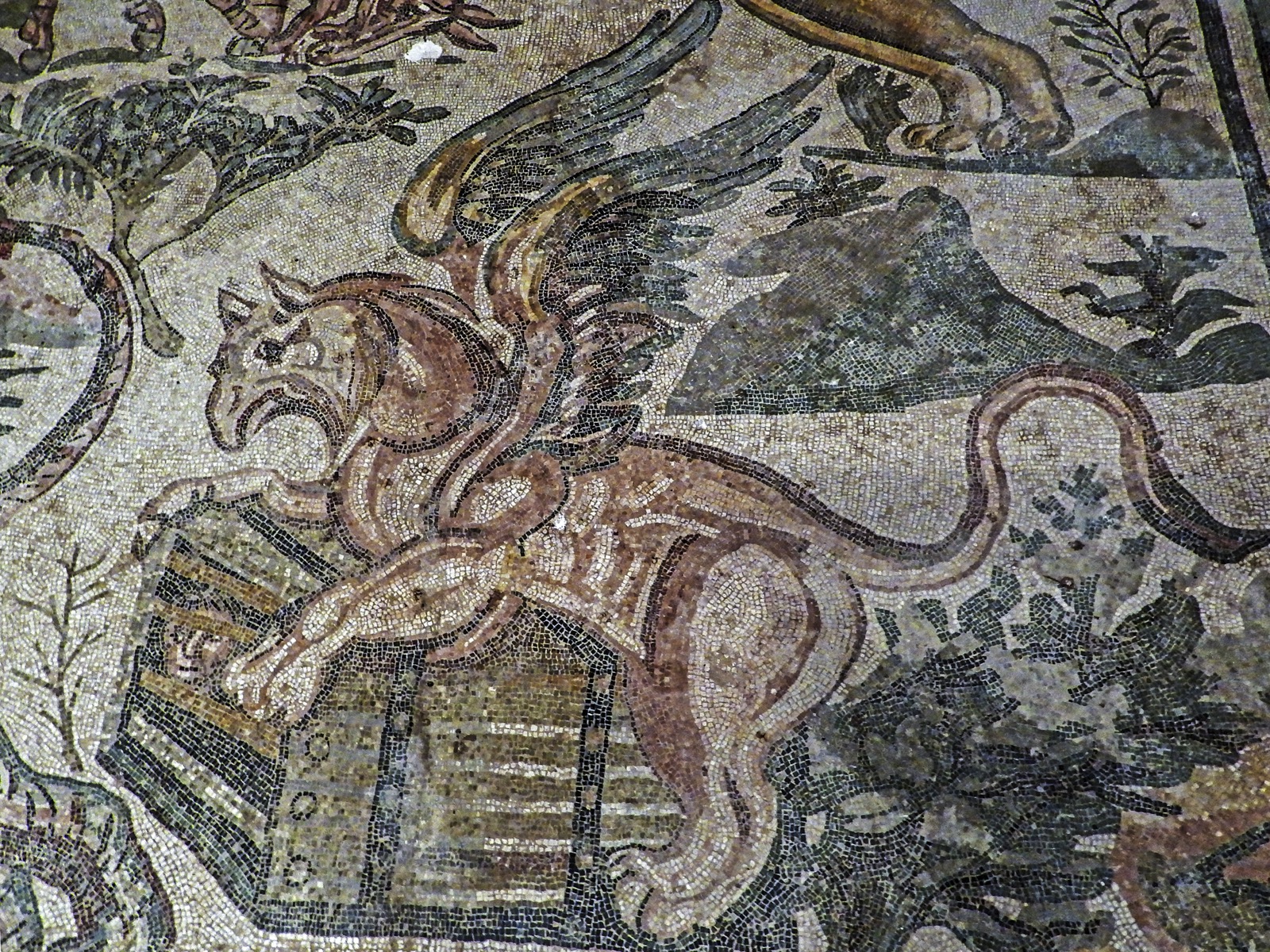 has a clear intent to celebrate the magnificence of the villa’s commissioner and the empire’s ordering function over the “barbaric” regions it had conquered.