Biapsidal Hall

The astral interpretation of the mosaic

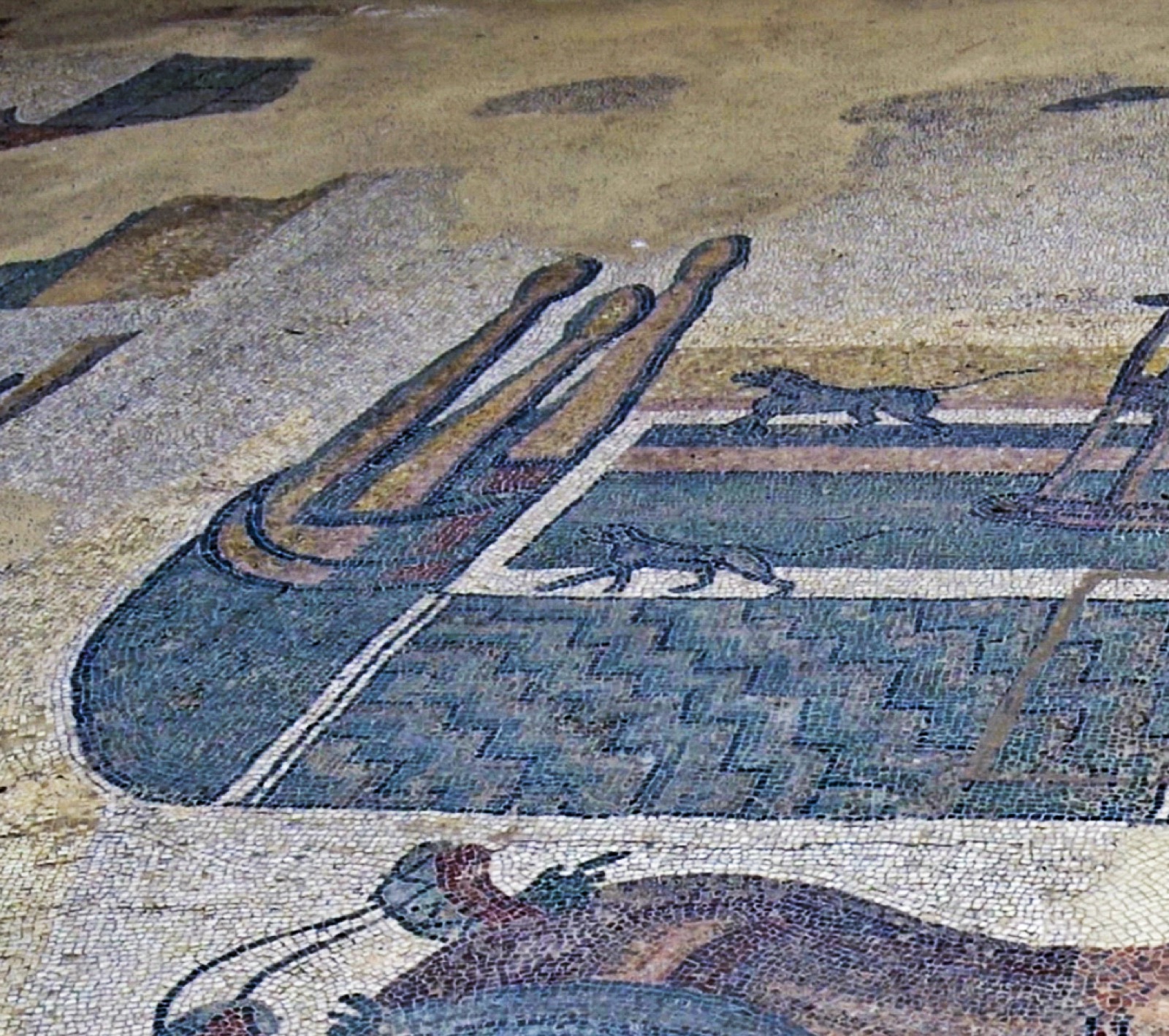
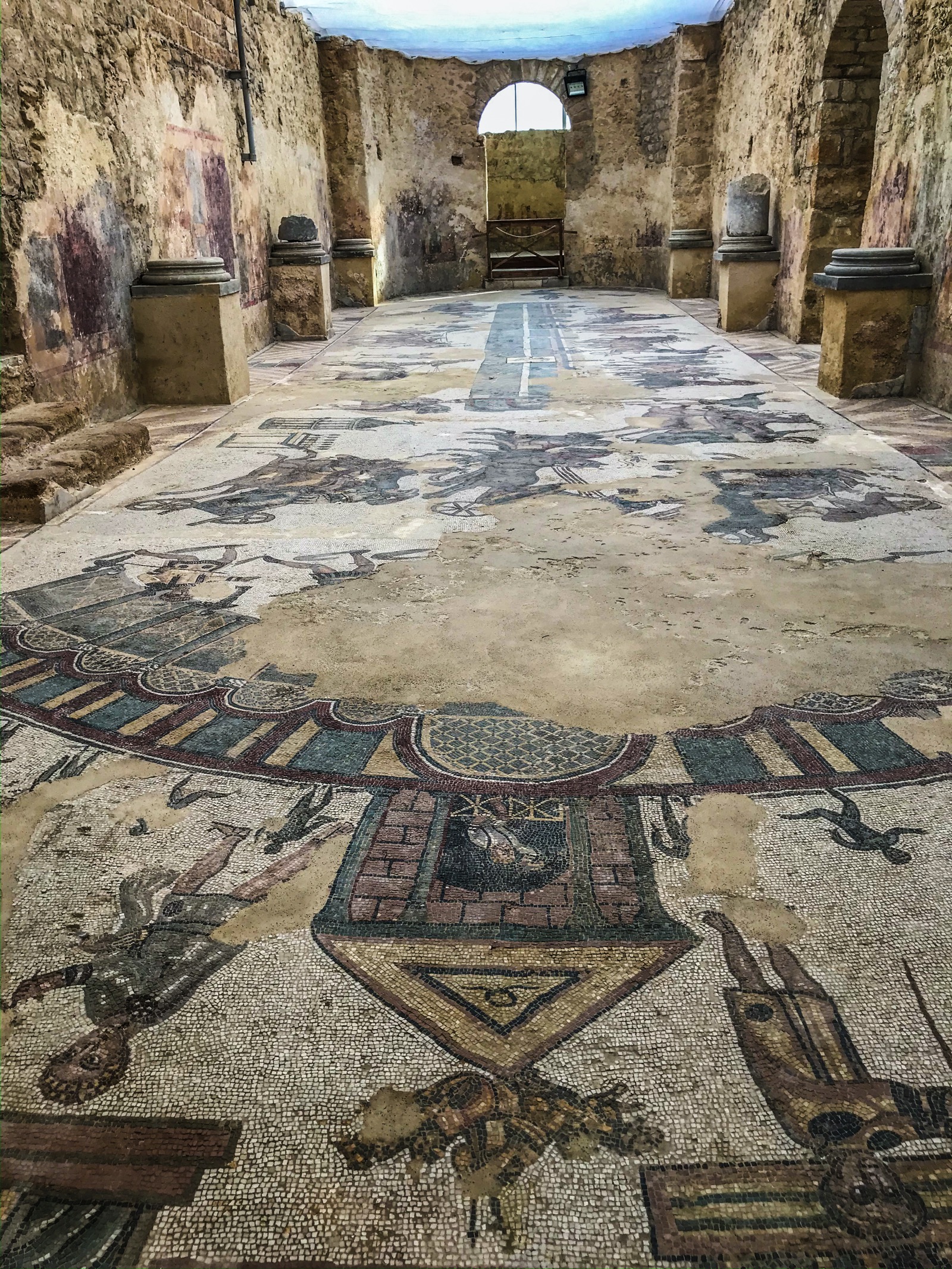
A completely different reading from the one highlighted in the mosaic decoration of the room, with the depiction of a competition between different factions held at the Circus Maximus , is given by some late antiquity writings.

They put forward the hypothesis of an astral interpretation of the scene, establishing a correspondence between each element of the Circus and the stars, just as the cosmic order is reflected in the organisation of the Empire. The twelve carceres, the gates from which the chariots departed, each crowned by a statue of a deity, symbolise the months of the year and the signs of the zodiac, the four factions are the seasons, the chariots can be traced back to the sun and the curricle to the moon.
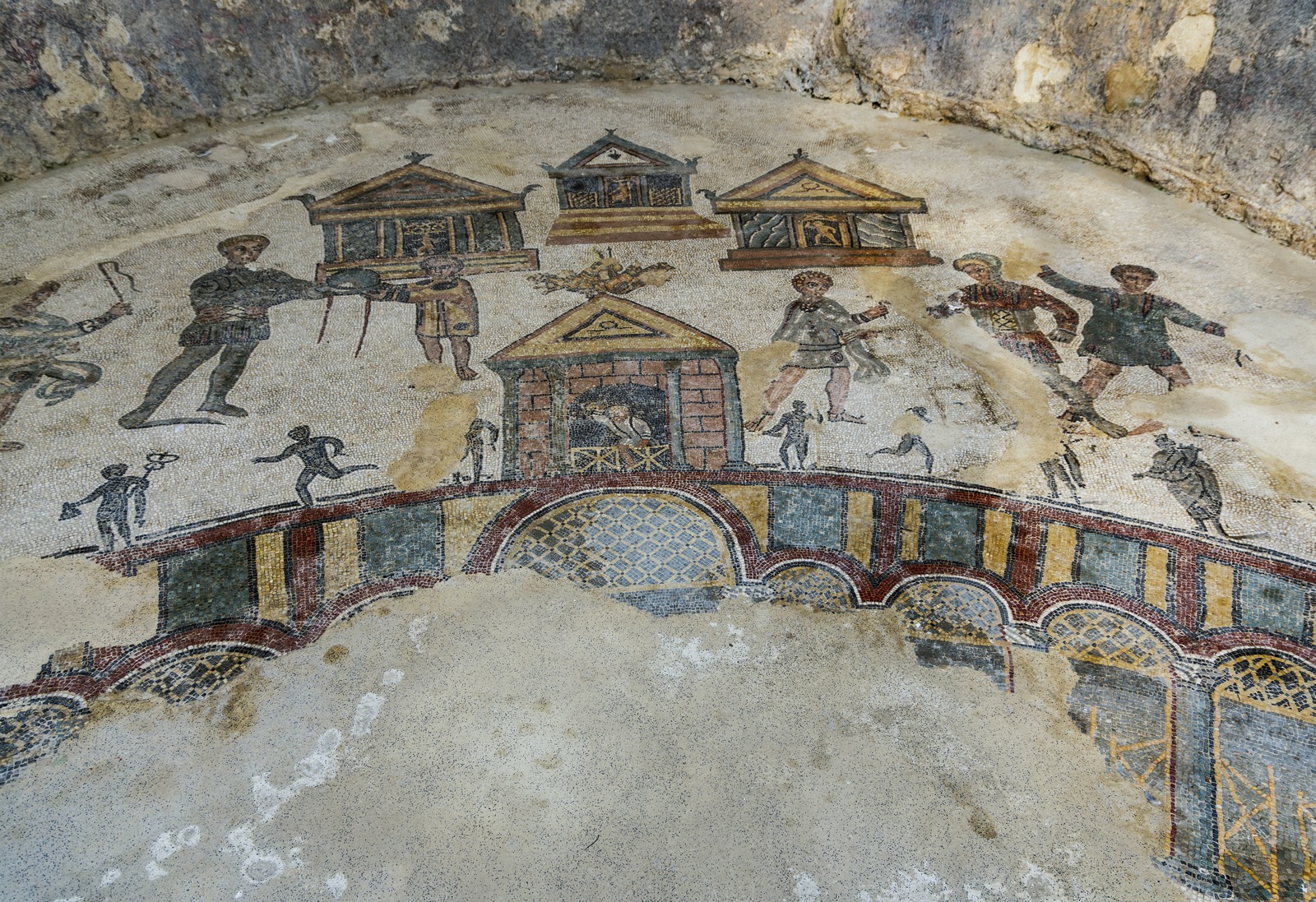
Other constituent elements of the Circus, such as the metae of the spina, represent the poles of the celestial axis, while the laps of the route recall the passing of years. Finally, the delimited structure of the Circus would represent the limites aetherei, the boundaries of the sky.


The senses tell the Quadrangular Peristyle

A small room embellished with marble

The protagonists of the mosaic and the military themed frescoes

The astral interpretation of the mosaic

The apotheosis of Hercules

Is the profile of the dominus hidden among the scenes depicted in the mosaics?

The golden age: hypotheses about the villa’s period of construction and clues

The prestige of the dominus is revealed through the wall frescoes

Outdoor breakfast

The senses tell the Tri-Apsed Triclinium

An organic microcosm: the structure of the villa

A small room used as a privileged entrance to the baths

The possible celebration of a solemn event

The capture of wild animals for the roman amphitheatre games

The main nuclei of the Domus

The senses tell the Vestibule

A royal room housed the Dominus during his audiences

A day of hunting at the villa

The senses tell the room in the private apartment known as “small hunt”

The senses tell the Sacellum of the Lares

The mansio of Philosophiana. A stopping place

The senses tell the massage room

The rural sacrifice

The senses tell the Bi-Apsed room

The late antiquity residence: locus amoenus and centre of administrative activities in the heart of Sicily

A chariot race, set in the circus Maximus of Rome, connects the villa to the city and centre of power

A large colonnaded portico, a place of connection between the rooms

A view of the race from the imperial gallery

The senses tell the frigidarium

Solemn and majestic architecture to welcome a high-ranking commissioner

The protagonists of the mosaics

The paths of virus, a reflection of the Dominus

An individual who has attracted the attention of scholars

The senses tell the bi-apsed ambulatory – Corridor of the “Great Hunt”

The mosaics of the late antiquity residence

The public and private rooms of the villa

A line of armed men for an important Dominus

The catalogue of animals

The senses tell the Basilica

An official ceremony to welcome the Dominus

The senses tell the monumental entrance

Form of greeting or ritual?

Semi-public rooms

A small room represents one of the activities of the thermal bath route

The Latifundium

An eloquent symbol: the signum

A dialogue between mythological and realistic scenes

A hidden meaning

High-ranking characters depicted in the mosaics of the apsidal niches of the frigidarium

The senses tell the private entrance to the spa

Worship of the Lares

Banquets and panegyrics enlivened the vast hall, against the background of a floor mosaic celebrating the feats of Hercules

The marble from the regions of the empire to decorate the basilica

Auspicious symbols and perhaps the initials of the commissioner’s name decorate the mosaic of the apsidal room

The realistic depiction of a spa procession with a high-ranking female figure