The context - the Villa

Is the profile of the dominus hidden among the scenes depicted in the mosaics?

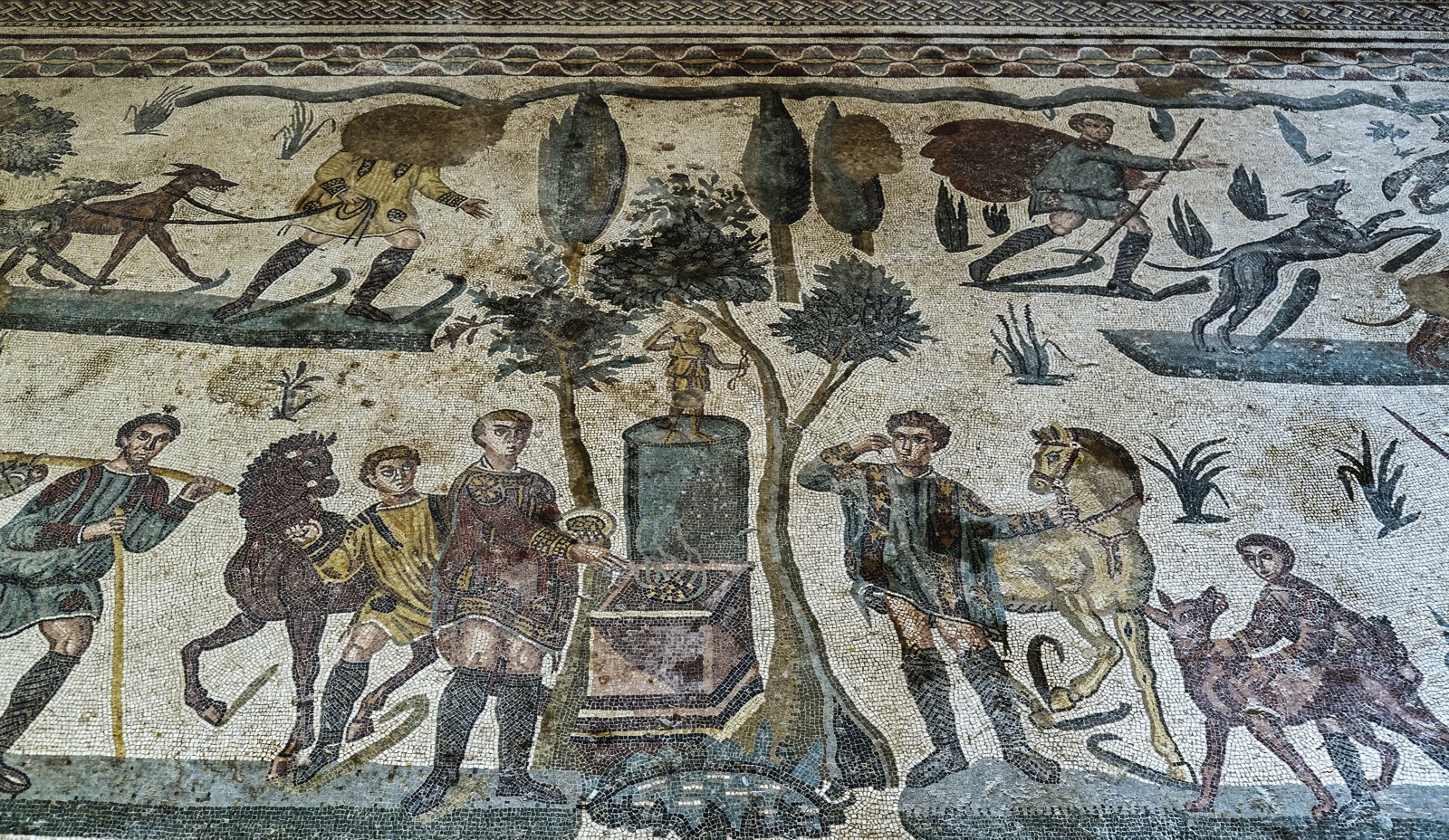
The large number of mosaics decorating the rooms of the Villa del Casale and the variety of subjects represented, which can be traced back to the end of the 3rd and the first half of the 4th century AD, with evident differences in compositional styles, suggests the intervention of different groups of mosaicists and periods of execution that were not always contemporary.The careful observation of the scenes and the type of content leads us to think of an individual of the highest rank, who wanted to imprint in the mosaics a reflection of his culture and the role he played in Rome in the late empire.
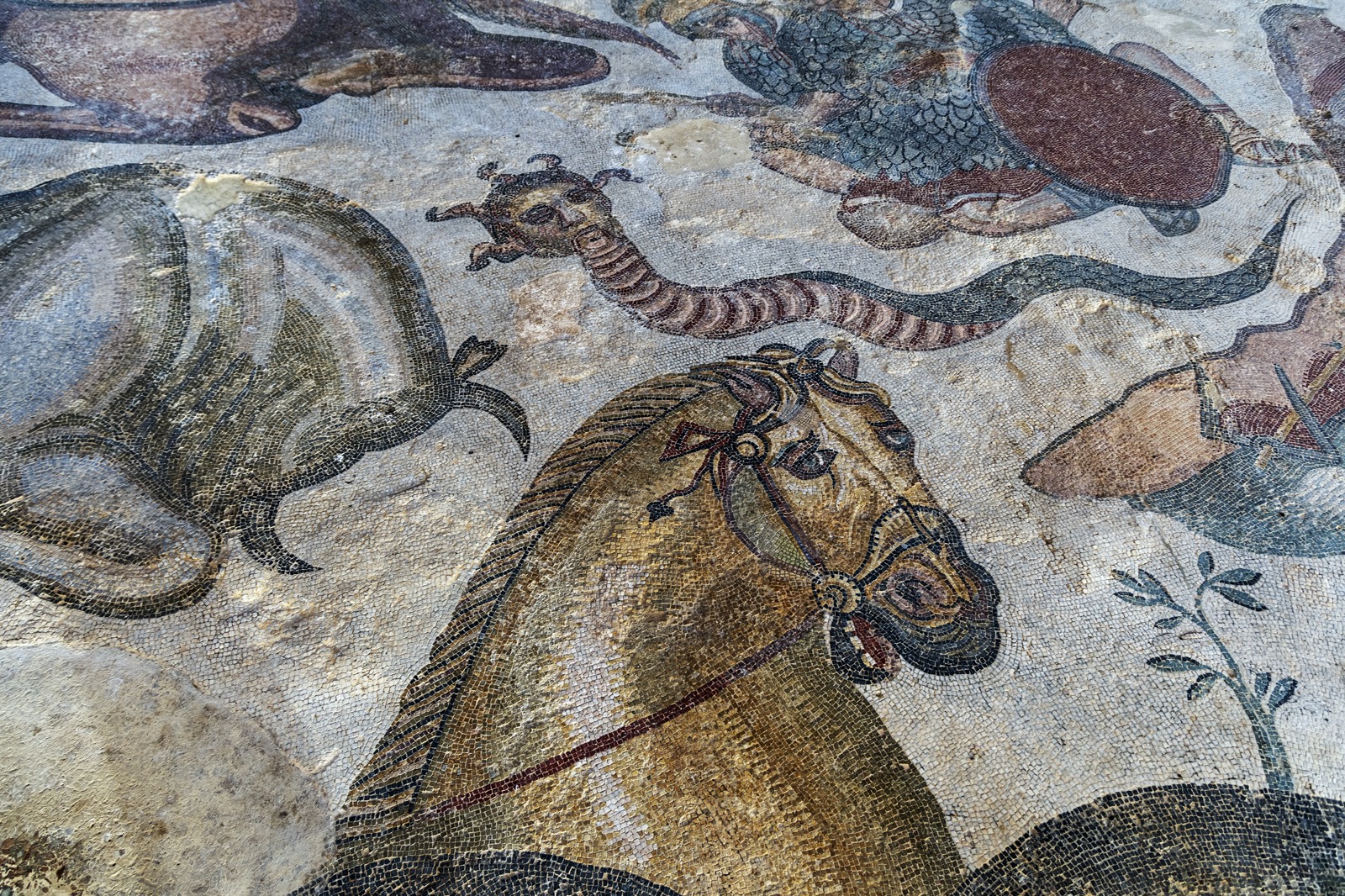
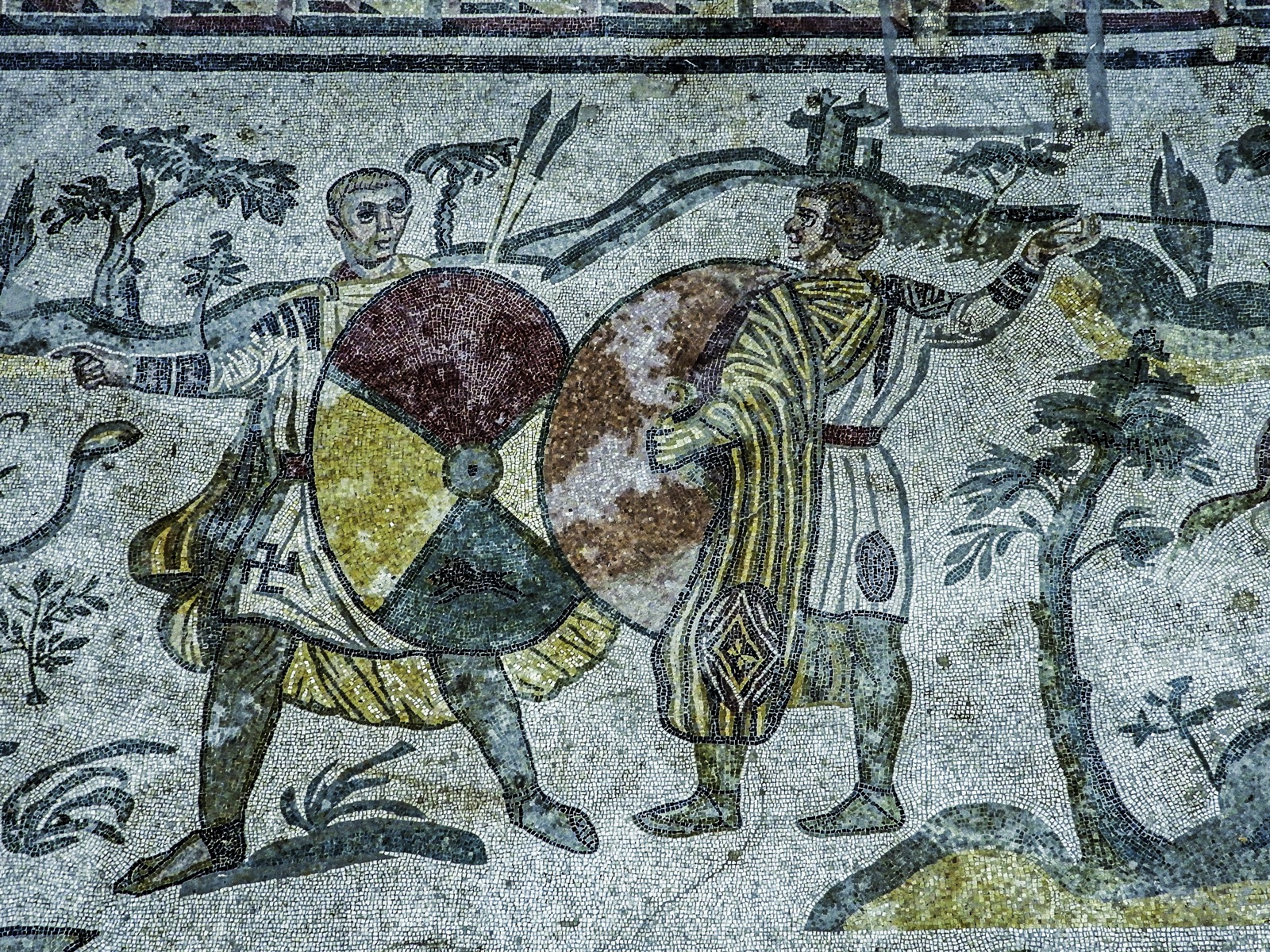
Various themes celebrate realistic scenes, which recall the figure of the dominus, master of the house, such as the mosaic of the adventus in the vestibule and the hall of the “small hunt”, or which are reminiscent of Rome and its circus performances, such as the mosaic of the “great hunt” and the chariot race in the biapsidal hall .

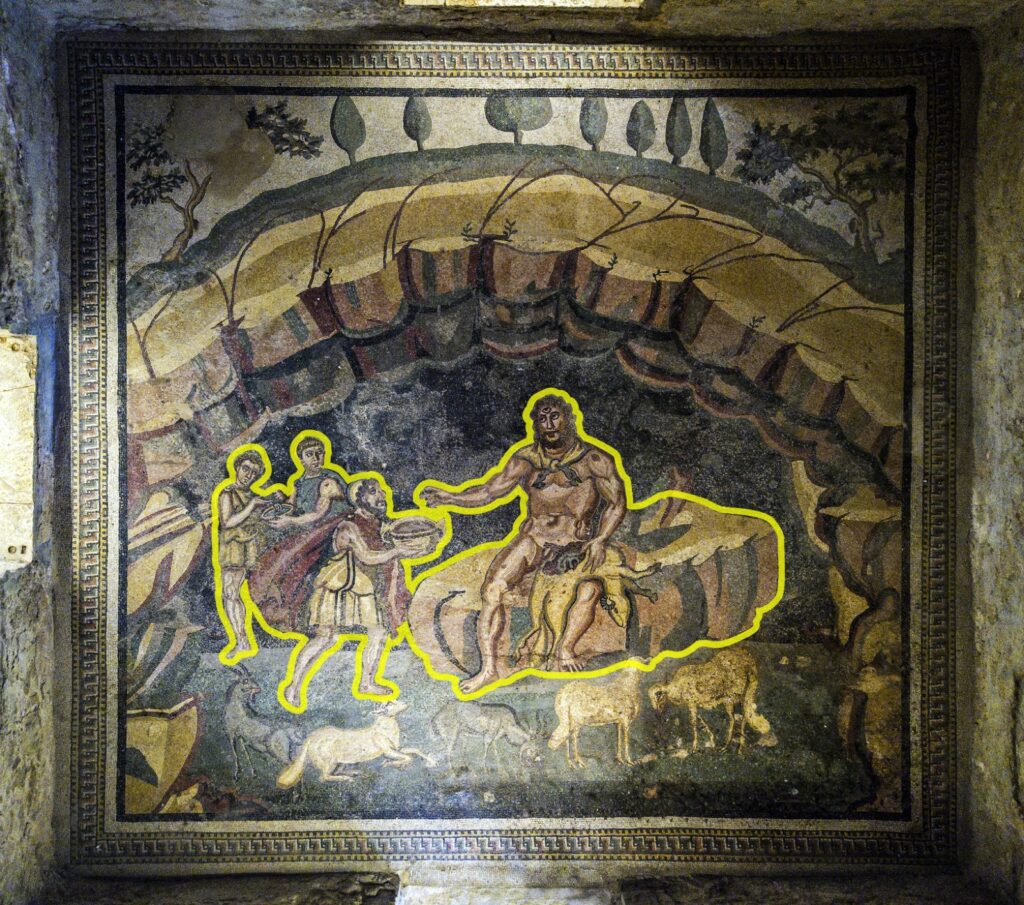
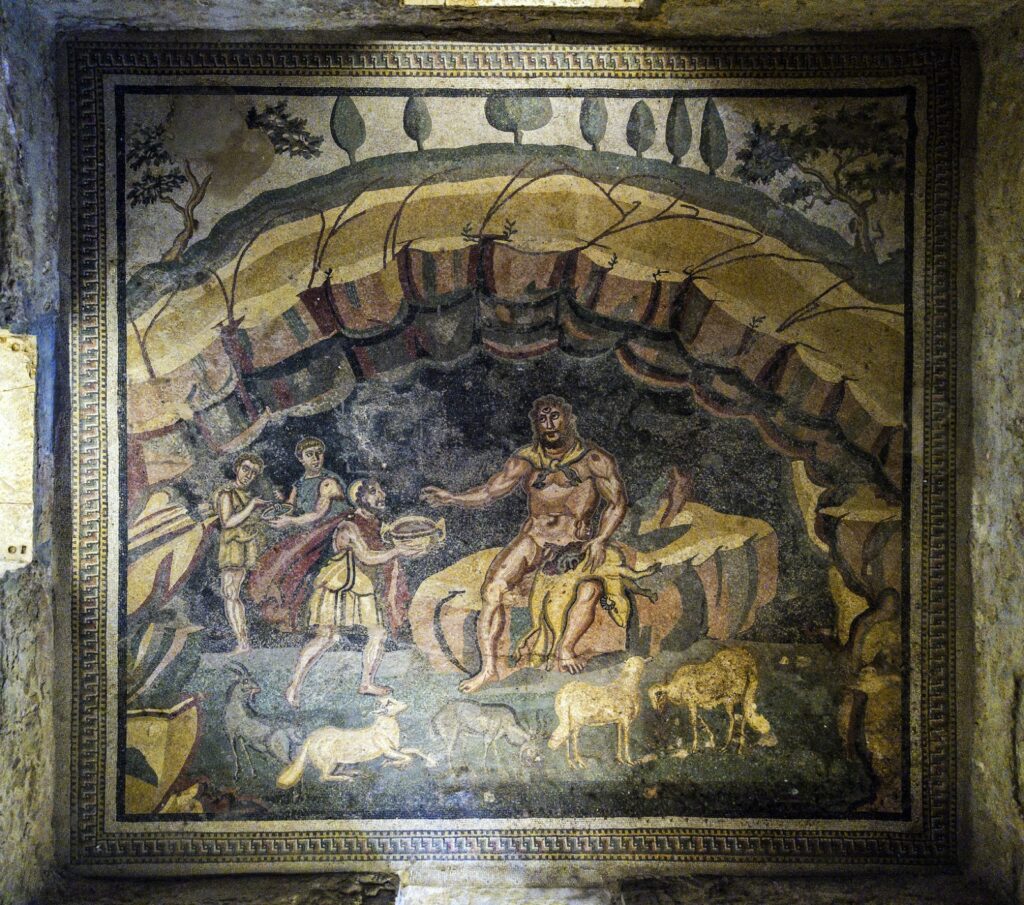
In the mythological scenes we also find a heroic celebration of the commissioner through images of the triumph of reason and virtue over the wild forces of nature: Hercules who defeats the giants, Orpheus who tames the land animals and Arion who tames the sea animals.
Finally, the generic scenes with busts depicting the seasons, or the xenia, hospitable gifts of fruit, birds or fish, together with the numerous scenes of fisherman or grape harvesting erotes, also attributable to an important figure who, through these subjects, sought to emphasise the productivity of his land.

Semi-public rooms

A small room used as a privileged entrance to the baths

The rural sacrifice

A small room embellished with marble

The senses tell the monumental entrance

The mosaics of the late antiquity residence

Is the profile of the dominus hidden among the scenes depicted in the mosaics?

The protagonists of the mosaic and the military themed frescoes

The possible celebration of a solemn event

The late antiquity residence: locus amoenus and centre of administrative activities in the heart of Sicily

A view of the race from the imperial gallery

A large colonnaded portico, a place of connection between the rooms

The public and private rooms of the villa

An organic microcosm: the structure of the villa

The senses tell the bi-apsed ambulatory – Corridor of the “Great Hunt”

The apotheosis of Hercules

Form of greeting or ritual?

A royal room housed the Dominus during his audiences

A small room represents one of the activities of the thermal bath route

The prestige of the dominus is revealed through the wall frescoes

Worship of the Lares

The senses tell the Basilica

The senses tell the room in the private apartment known as “small hunt”

The Latifundium

The paths of virus, a reflection of the Dominus

The golden age: hypotheses about the villa’s period of construction and clues

A chariot race, set in the circus Maximus of Rome, connects the villa to the city and centre of power

The astral interpretation of the mosaic

The senses tell the massage room

A line of armed men for an important Dominus

An eloquent symbol: the signum

Auspicious symbols and perhaps the initials of the commissioner’s name decorate the mosaic of the apsidal room

An official ceremony to welcome the Dominus

The marble from the regions of the empire to decorate the basilica

The senses tell the private entrance to the spa

Outdoor breakfast

The senses tell the Vestibule

A day of hunting at the villa

The senses tell the Tri-Apsed Triclinium

An individual who has attracted the attention of scholars

The capture of wild animals for the roman amphitheatre games

The senses tell the Bi-Apsed room

The mansio of Philosophiana. A stopping place

The senses tell the Sacellum of the Lares

The senses tell the frigidarium

The realistic depiction of a spa procession with a high-ranking female figure

Solemn and majestic architecture to welcome a high-ranking commissioner

The senses tell the Quadrangular Peristyle

The main nuclei of the Domus

The protagonists of the mosaics

The catalogue of animals

A hidden meaning

A dialogue between mythological and realistic scenes

Banquets and panegyrics enlivened the vast hall, against the background of a floor mosaic celebrating the feats of Hercules

High-ranking characters depicted in the mosaics of the apsidal niches of the frigidarium