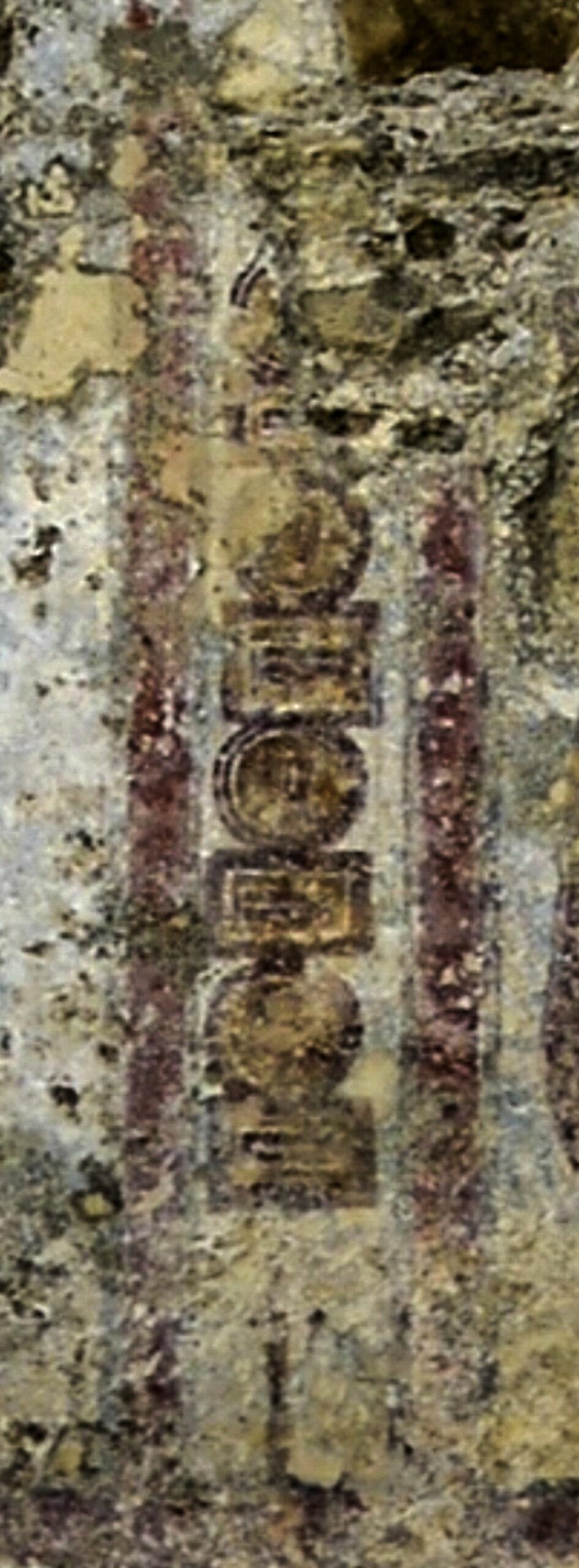
The recent restoration, which also involved the monumental entrance, highlighted a unique aspect of the best preserved signum
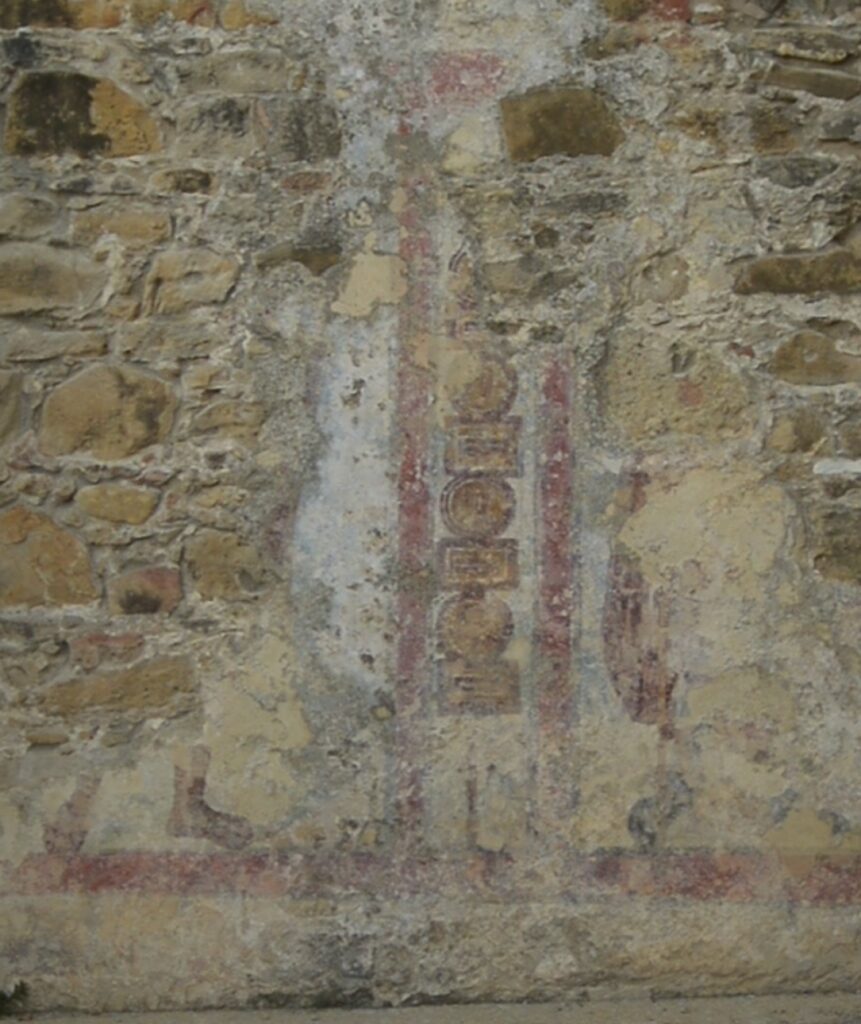
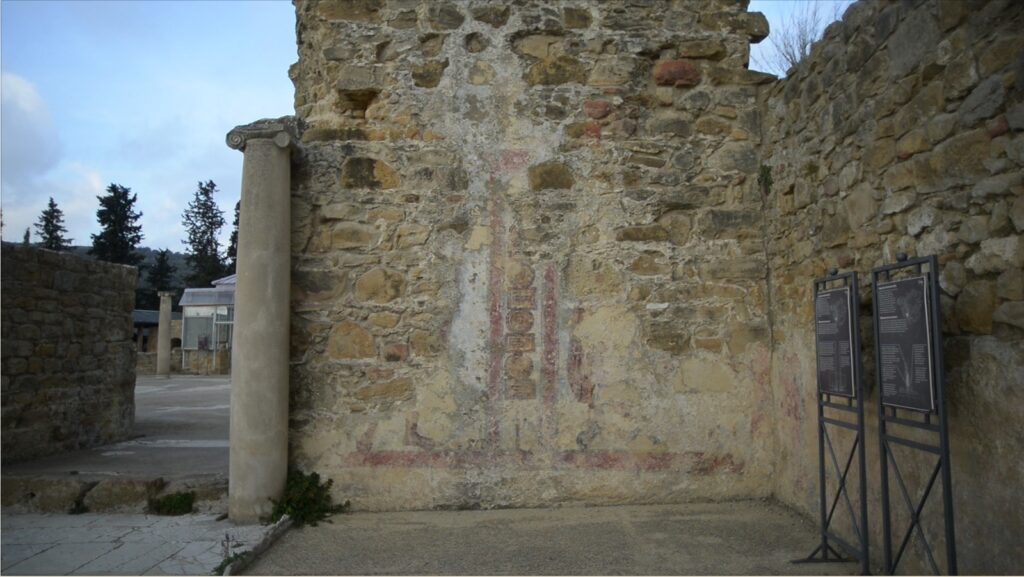
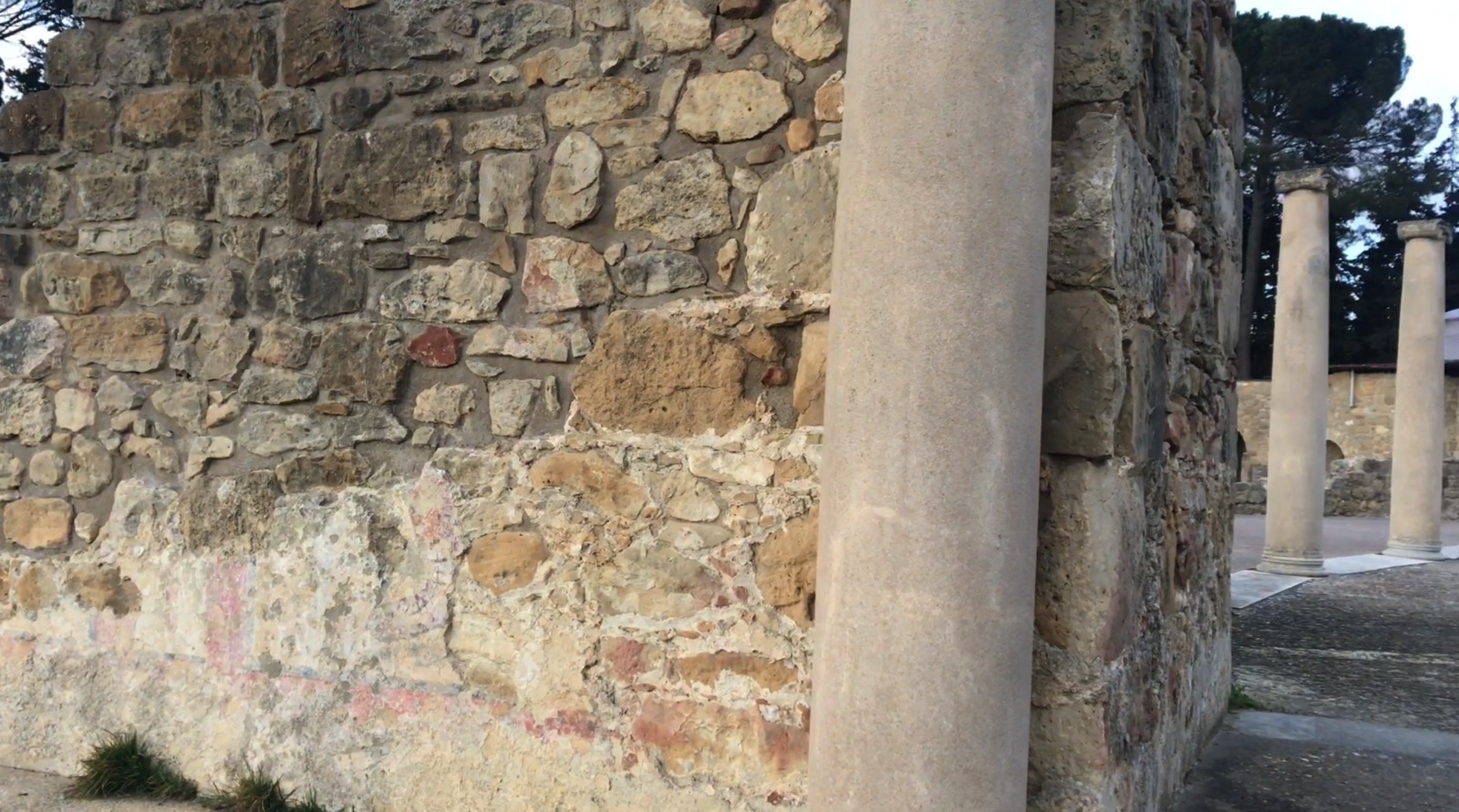 One of the two military signa frescoed on the wall adjoining the right-hand
fornix
One of the two military signa frescoed on the wall adjoining the right-hand
fornix

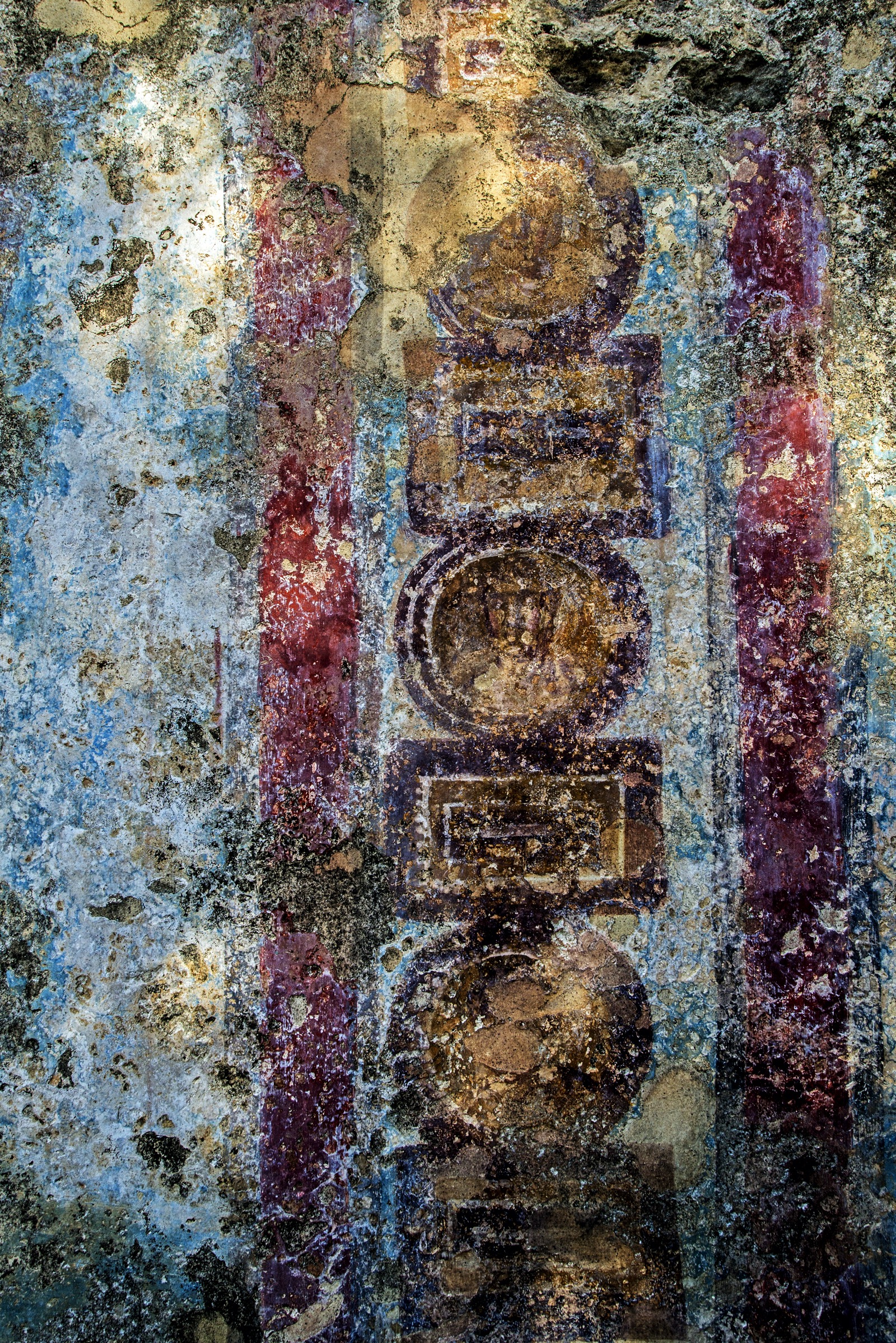 shows four
phalerae
shows four
phalerae
 , which alternate with rectangles. These medallions most likely depicted imperial portraits: the first two from the top with the bust of the two Augusti, the remaining two with those of the two Caesars
 of the first
tetrarchy
of the first
tetrarchy
 or of
Constantine
or of
Constantine
 and his family. The most legible portrait is the third from the top, which some say depicts Galerius,
 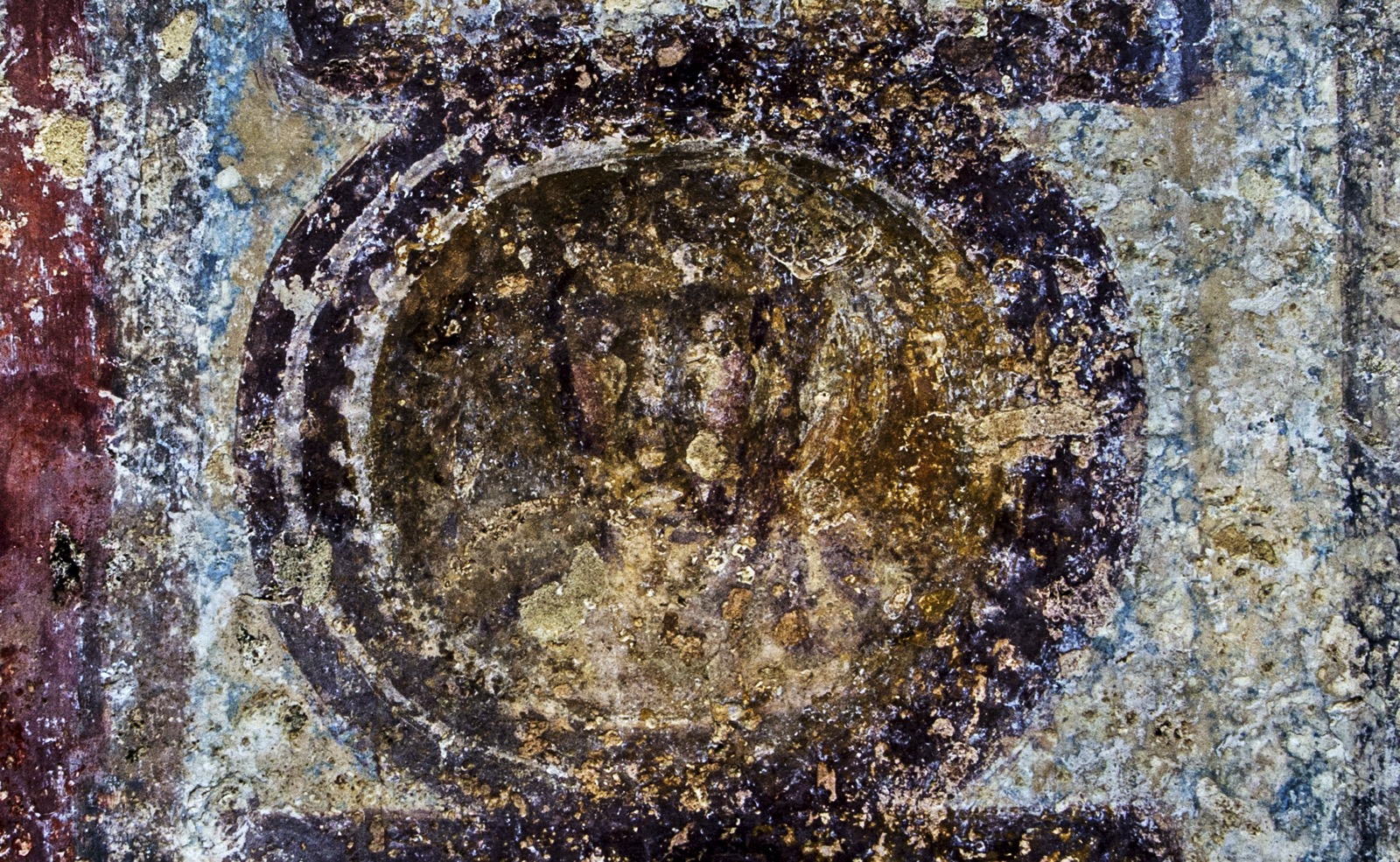 even if it does not resemble his official portraits. He is placed in a three-quarter view, has an elongated face framed by a short beard, typical of the iconography of the Tetrarchic tradition, and a dark fringe, in the act of looking towards the entrance. The image inserted in a tondo, known as an imago clipeata, is typical of Roman portraiture and as mentioned, was used as an instrument of political and imperial promotion.
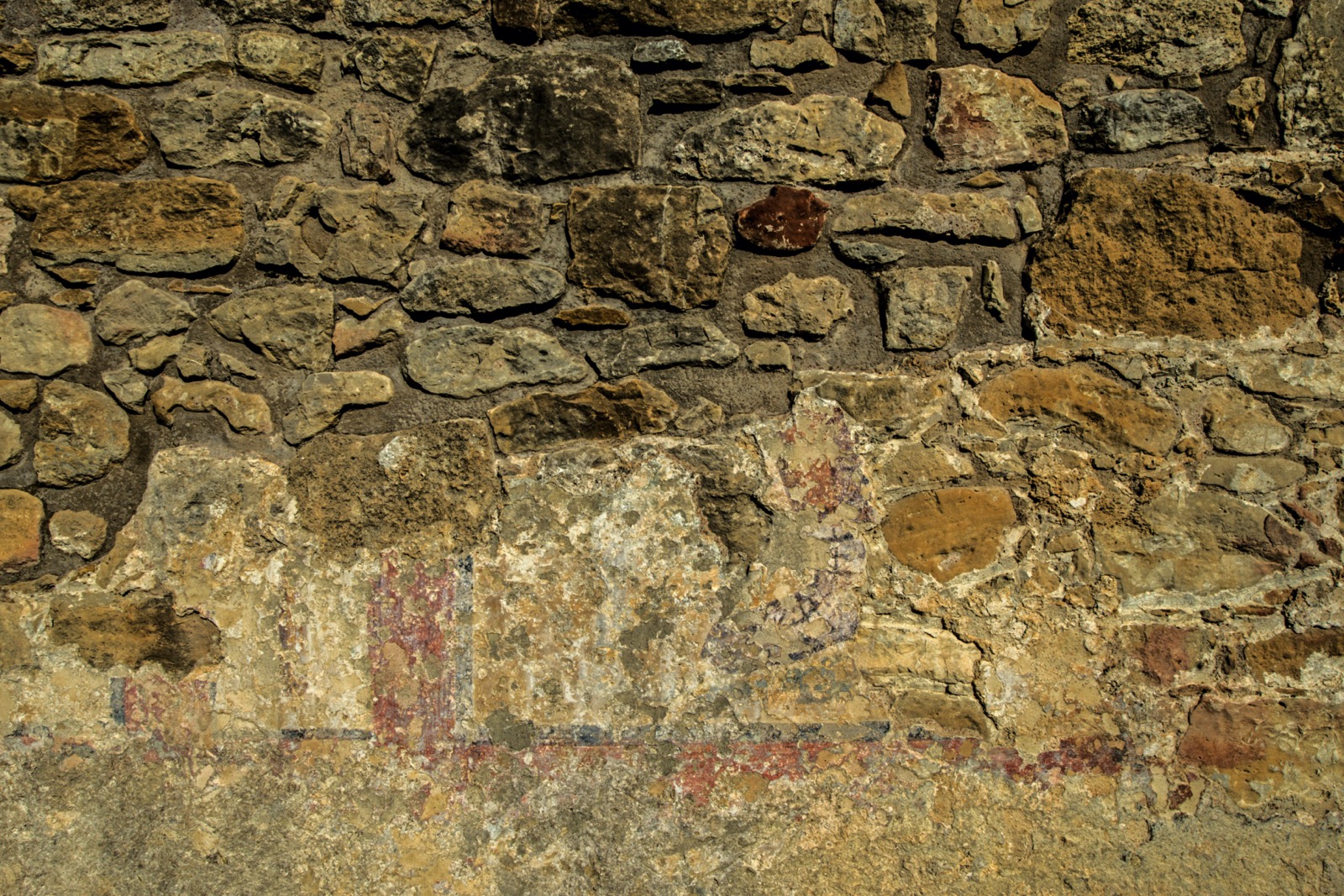 As it stands, studies have not reached unanimity or clarity on the presence of these eloquent symbols at the entrance to the villa: they could be attributed to an imperial commission or to a person who held important military positions or roles that included the use of the emperor’s insignia or images. In any case, the decorative wealth of the entrance has a celebratory purpose and is reminiscent of the magnificence of the imperial triumphal arches.