Panarea

Panarea, where sea and volcanoes become sculptors

Panarea is the smallest island of the archipelago in terms of size, but is probably the one with the most charm due to its natural beauty. Panarea is not only an island, but also a collection of many small isles and rocks with fantastic shapes and colours.
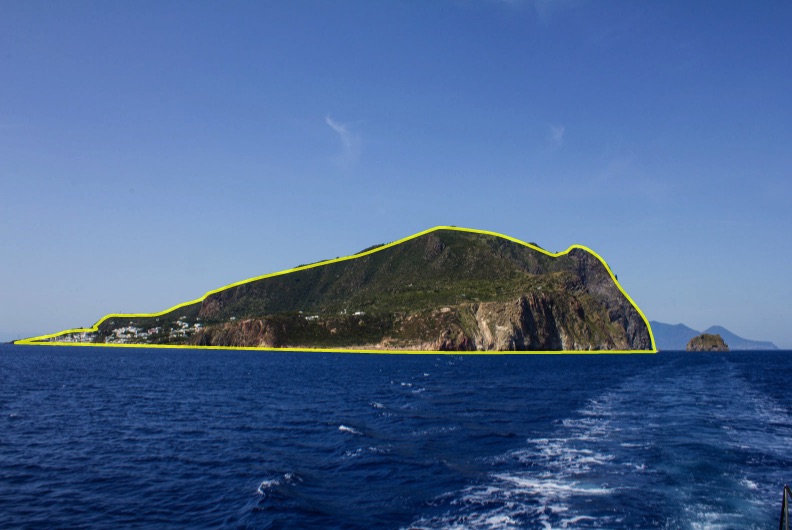
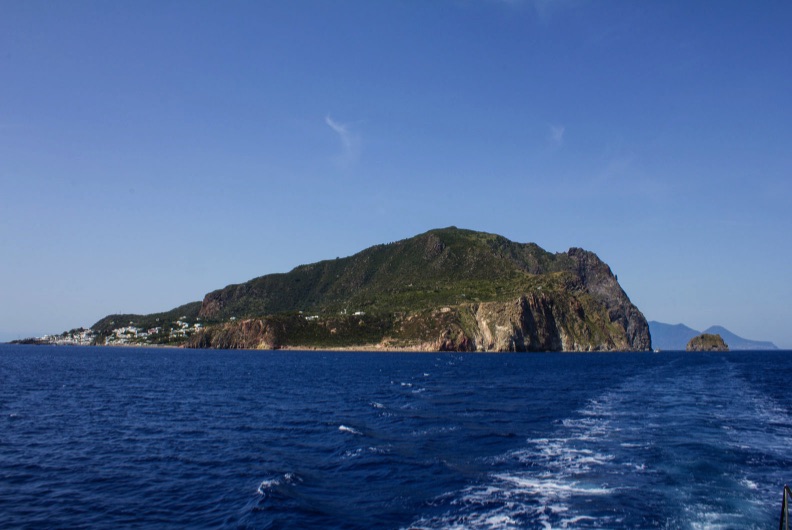

From a geological point of view, Panarea is the oldest in the archipelago, with products dating back over 330,000 years. Its volcanic structure has partially collapsed into the sea in the western and northern parts, resulting in uninhabitable steep slopes on the remaining part of the island. The eastern and southern parts of the island are flat. The height of what remains of the volcanic cone is 421 metres. The volcanic cone has remains of side craters formed over time.


The rocky spurs of Spinazzola, Basiluzzo, Panarelli, Dattilo, Lisca Bianca, Bottaro, Lisca Nera and Formiconi are wonderful. But do not be fooled by the island’s small size. Underwater Panarea is actually much more extensive. The current forms are the result of many caldera sinkings and explosions during the last stages of its eruption activity.

The town of Panarea is very small and consists of a series of well-tended and flowered alleys that connect the various parts of the town and the beaches. In antiquity, there were several names for Panarea: Euonymos (which is on the left, from Lipari towards Sicily) and Hycesia (the supplicant). Then Panaraion (the destroyed) appeared, following by Pagnaria (the cursed), Panaria, and finally Panarea.

The Village of Capo Graziano

Vulcano, the youngest of the Aeolian works of art

“Strombolian” activity in the place where its definition was born

Stromboli, the volcano that breathes

The senses tell The Village of Capo Graziano

The senses tell The Stacks of Panarea

The polis of the living and the necropolis of the dead

Lipari, where history intertwines with volcanoes to create archaeology

Malvasia delle Lipari DOC

Alicudi, where time has stood still

The underwater fumarolic activity of Lisca Bianca

Lipari Castle, “fused” with the lava

At the heart of trade in history

The stacks of Panarea

Pollara, between poetry and beauty

The malleability of Vulcano’s mud

The senses tell The salt lake of Lingua

The pure white of the pumice quarries

How pumice is formed

The 2002-03 eruption

The Cathedral of Lipari and the Norman Cloister of the Benedictine Monastery

Myths and legends about volcanoes

Stories of the sea and shipwrecks. The wrecks of the Aeolian Islands

The underwater morphological elements of the Aeolian Islands

Salina, the green island with twin mountains

The senses tell The Pumice Quarries of Lipari

Where do Vulcano’s gases come from?

Tsunamis: a not uncommon phenomenon in Stromboli

“Vulcanian” eruptions

The hidden part of the Aeolian Islands

Filicudi: small island, big history

The senses tell The Sciara del Fuoco

The prehistoric village of Cala Junco

The Thermal Baths of Saint Calogerus

The Sciara del Fuoco

Panarea and its history

Between brush strokes of sulphur and clouds of steam: the fumaroles of the port of Vulcano

Volcanoes as a natural art form

Seven islands, dozens of volcanoes

The Aeolian Islands, where volcanology was born

The summit craters

The Gran Cratere of the Fossa: when the volcano becomes a sculptor

Filicudi, a submerged paradise

Lipari at the centre of Mediterranean history

The ancient production of salt

Panarea, where sea and volcanoes become sculptors

The senses tell The summit craters

The salt lake of Lingua