The system of fortifications from land to sea

Syracuse during the tyranny of Dionysius

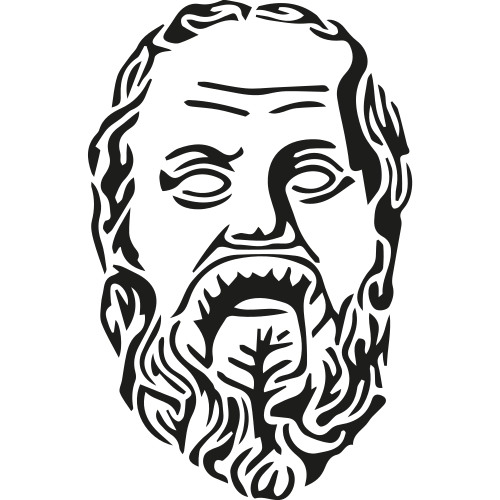
Dionysius I, or Dionysius the Elder, was an eclectic and controversial character known for his artistic and philosophical streak and his cruel and bloody temperament. He was tyrant of Syracuse, ruling from 405 to 367 BC and was an emblematic figure of ancient Sicily thanks to his fierce expansionist politics. In this period Syracuse stood out for its rich cultural turmoil: since Dionysius was in fact a man of great culture and a patron, his court hosted personalities such as Plato , Philoxenus and Aristippus of Cyrene and welcomed many artisans and intellectuals.
Ortygia became his stronghold and for this reason had to be protected: mindful of previous war experiences, Dionysius surrounded the area with defensive fortifications and had the famous Euryalus Fortress built. The land of Syracuse had to become impregnable at all costs.
At the same time, the tyrant is remembered today as an undisputed example of cruelty, as shown by many anecdotes about his personality in the works of Cicero and Plutarch.


The Jews, a wandering people

The Cathedral of Syracuse

The Dionysian Walls: a masterpiece of Greek engineering

The architecture of the Piazza

Pantalica: where nature and history merge

The Venationes

The Euryalus Fortress

Piazza del Duomo, a sacred place of the ancient Greeks

The functions of Castello Maniace

The Church of St. Lucia to the Abbey

Castello Maniace

Crypt of San Marciano

The Museion and the Grotta del Ninfeo

The Senatorial Palace

Temple of Apollo

Traces of Christianity in Syracuse

Neapolis from past to present

The Gladiator performances

The Church of San Giovanni alle Catacombe

The Athenaion of the tyrant Gelon

The Altar of Hieron II: Blood and fire place

Legends and magic echoes in the Latomie of Syracuse

Where seas and civilisations meet

Syracuse during the tyranny of Dionysius

Inside the Cathedral of Ortygia

The Roman Amphitheatre

King Hyblon’s kingdom: Pantalica, between history and legend

The Greek Theatre of Syracuse

The catacombs of San Giovanni

Ortygia. Venus rising from the waters of the port

The Culture of Pantalica

The Ear of Dionysius and the Grotta dei Cordari

Byzantine Pantalica

Roman Syracuse, a military power thanks to the genius of Archimedes

Giudecca, the hidden Jewish heart of Syracuse

The cultural significance of tragedy

The Spanish fortification