On the extreme tip of the island of Ortygia, you can see the mighty bulk of the Castello Maniace, considered the most important building among the monuments from the Suevian period.
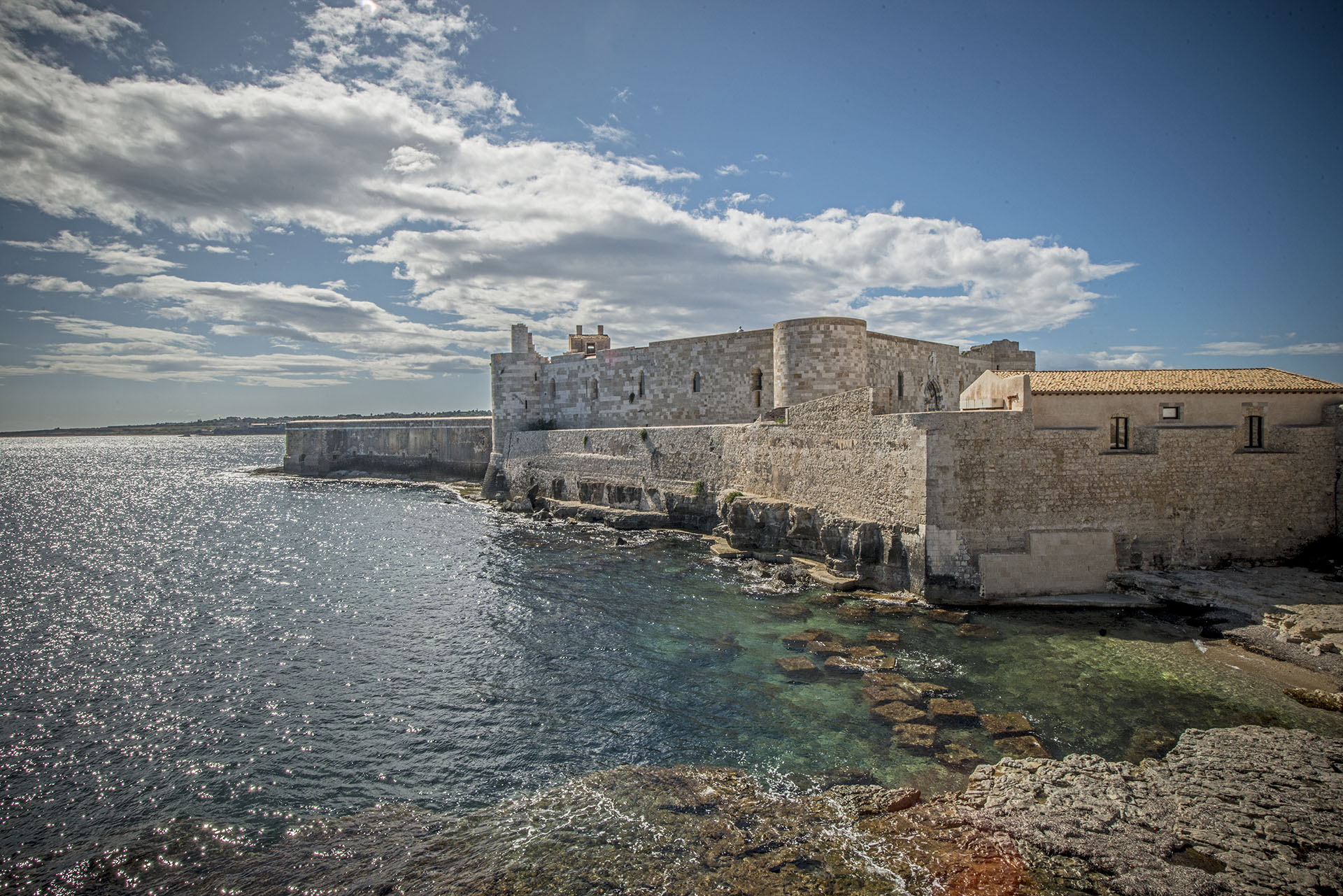 On the castle’s site, there are signs of previous fortifications from Greek times, it being a strategically important area for the city’s defence. Its name comes from Giorgio Maniace, the Byzantine general who conquered the city in 1038, taking it from the Muslims.
The Frederician castle, built between 1232 and 1240, is a mixture of very distant cultural influences.
Frederick II
 of Swabia was in fact born and raised among the splendours of the multi-ethnic kingdom founded by his maternal grandfather Roger II, developing a culture dedicated to travel, scientific study and art.
Of the grandiose Frederician project, however, only the lower part was completed.
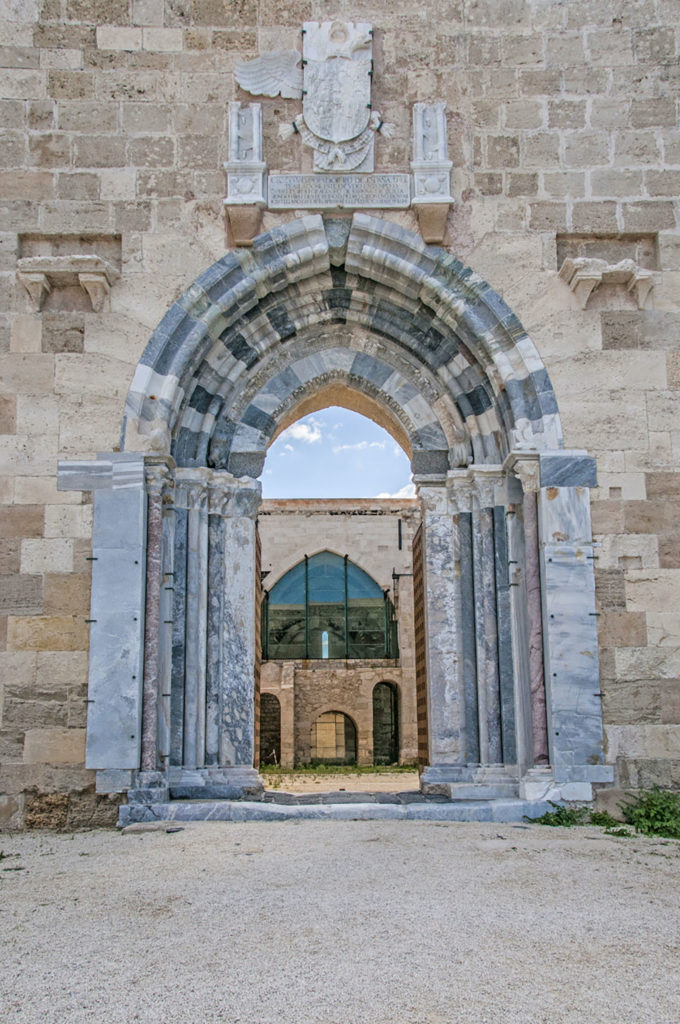
Access to the castle is granted through a gate with an
a pointed arch
 of considerable size, enriched with marble of various qualities.
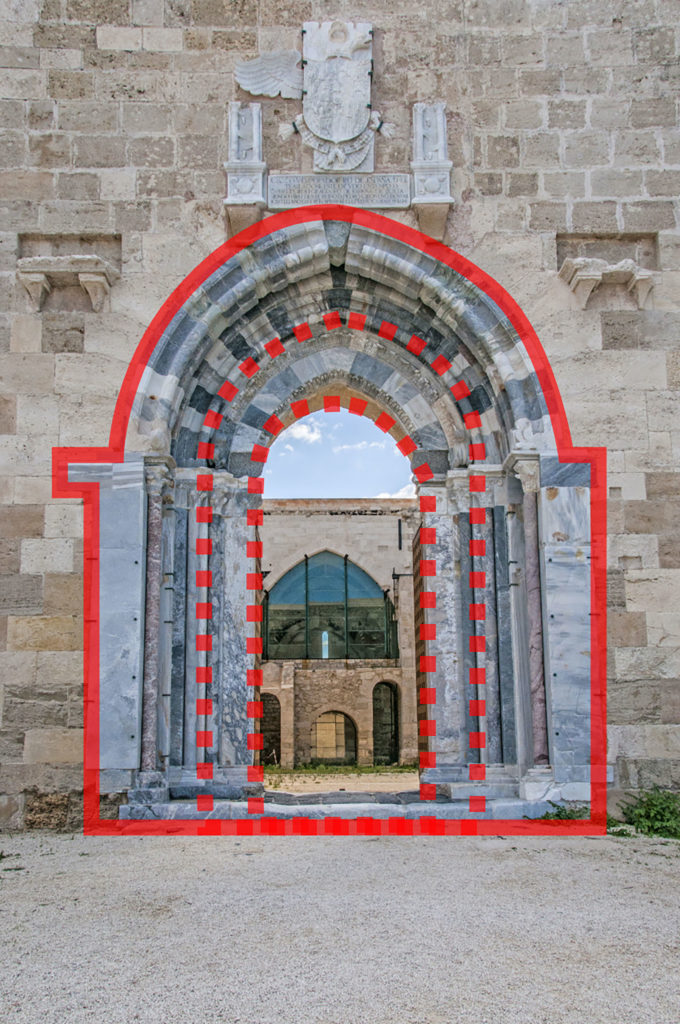
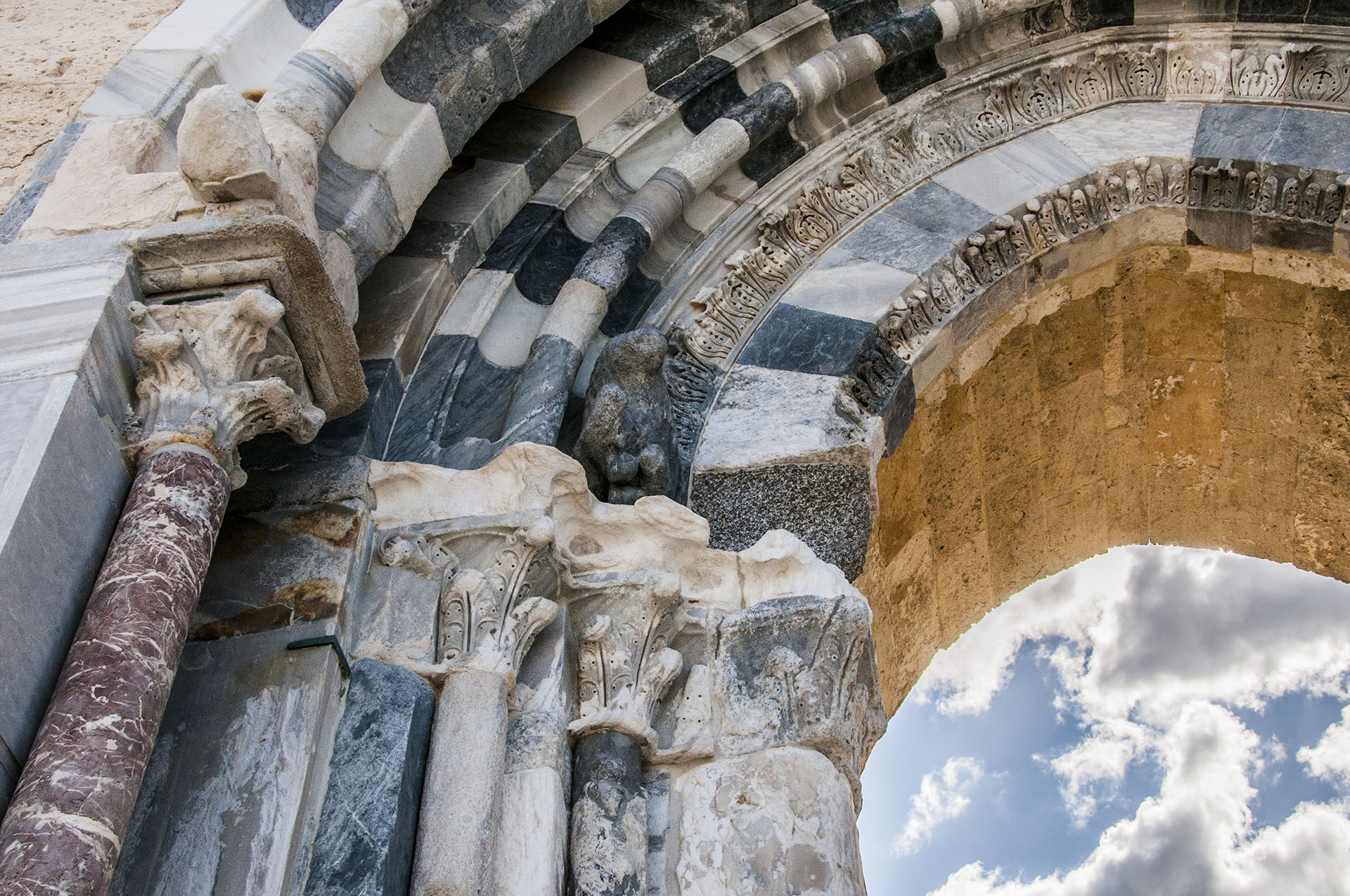 Above the capitals, four zoomorphic figures dominate the corbels, now very incomplete: they were probably winged lions or hippogriffs. A mighty perimeter wall with its circular towers, which incited fear and respect in those arriving from sea or land, is contrasted by an extraordinary and elegant interior space, similar to a royal residence.
that outline the splendid cross vaults depart.
Above the capitals, four zoomorphic figures dominate the corbels, now very incomplete: they were probably winged lions or hippogriffs. A mighty perimeter wall with its circular towers, which incited fear and respect in those arriving from sea or land, is contrasted by an extraordinary and elegant interior space, similar to a royal residence.
that outline the splendid cross vaults depart.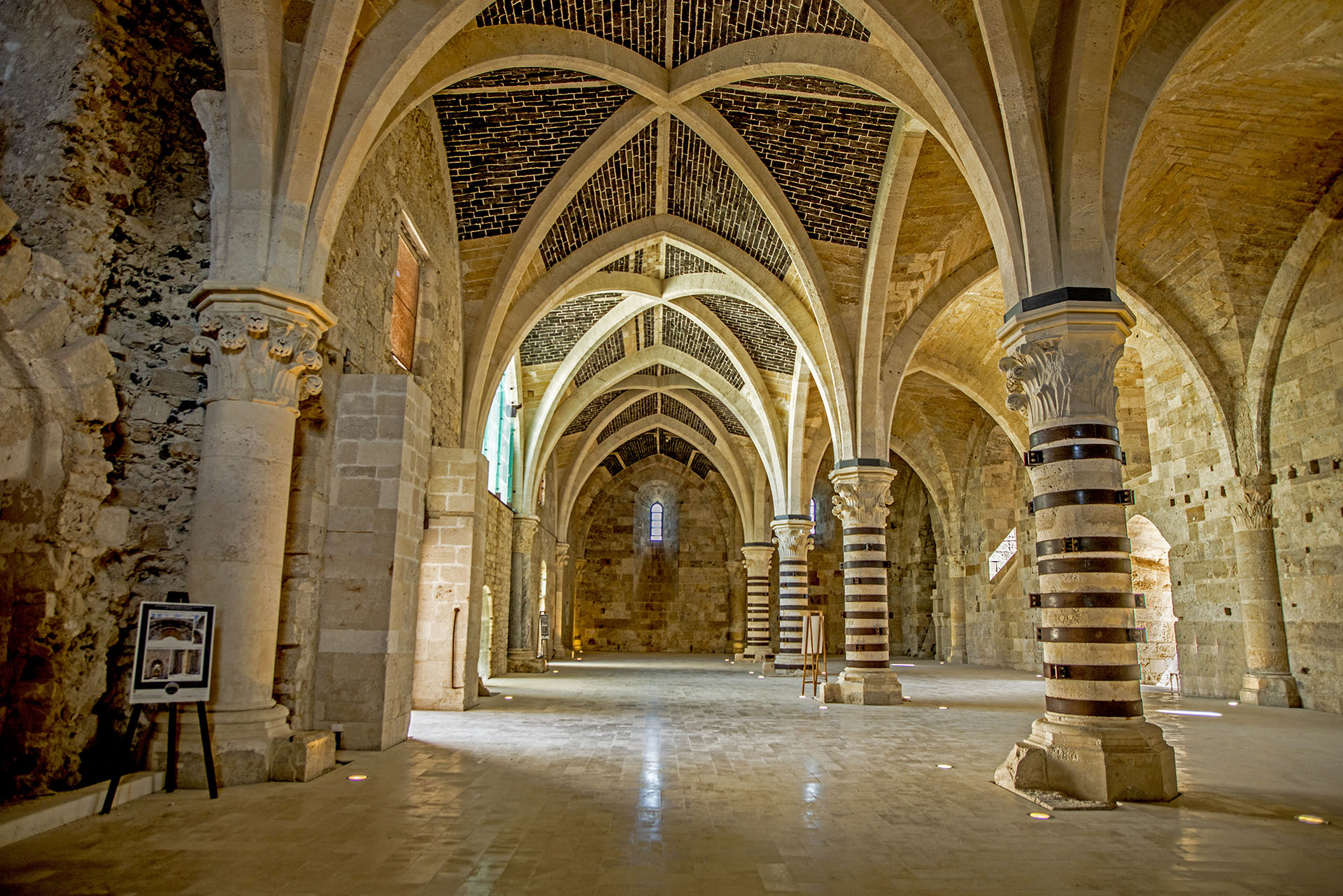 The geometric design created by the column arrangement appears almost like a chessboard, whose geometric centre is accentuated by four groups of columns made, instead of limestone, from marble and granite, of which only two remain.