Val Calanna is located immediately upstream of the town of Zafferana Etnea, in the extreme south-eastern part of the Valle del Bove, and might well be one of the most fascinating historic places in modern Etnean history. The valley takes its name from Mount Calanna, a small round summit covered by recent lava. In reality, these are only the remains of
one of the largest eruptive centres
 in the history of Mount Etna.
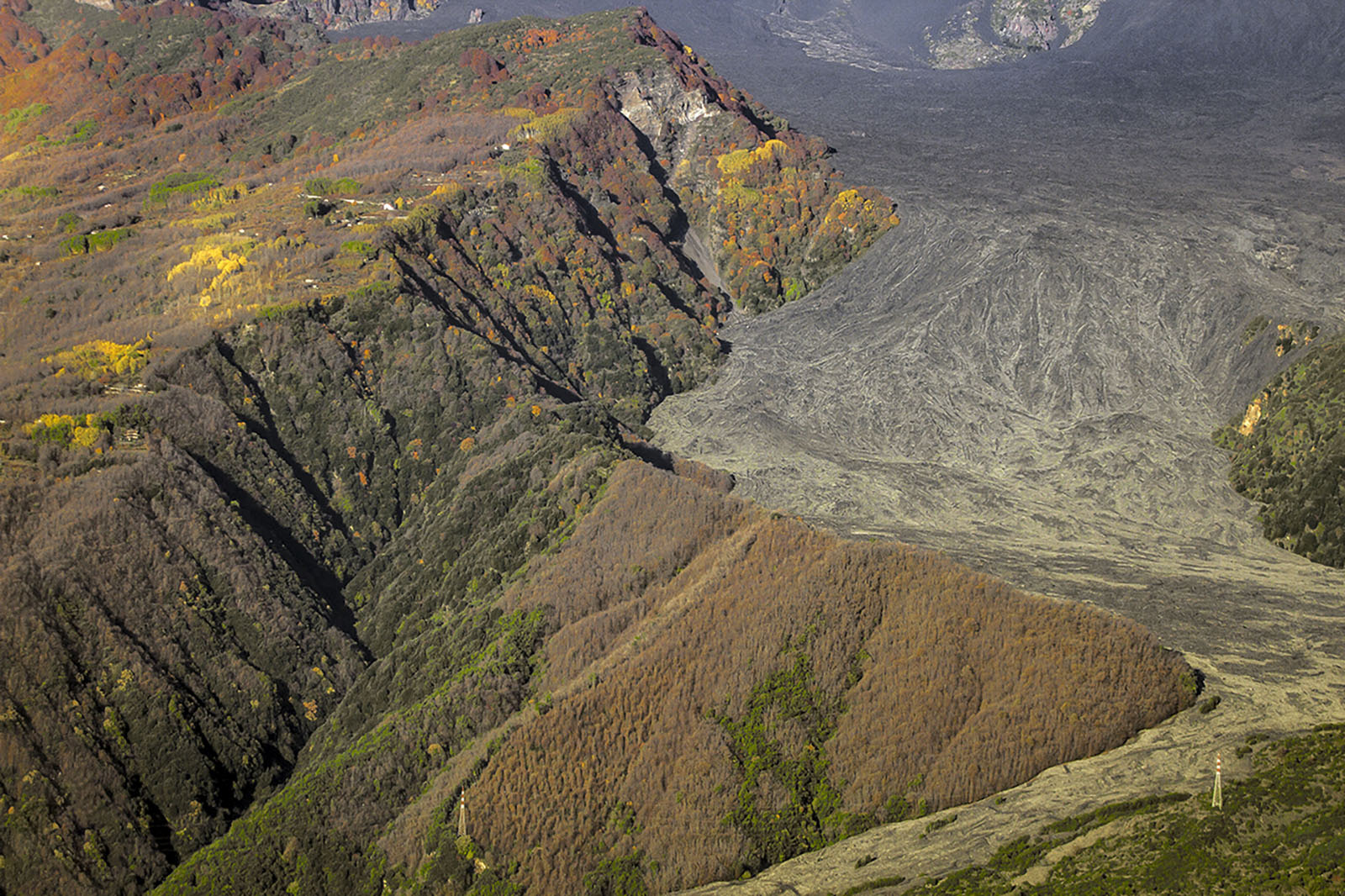 Val Calanna is bordered by the southern edge of the
Valle del Bove
Val Calanna is bordered by the southern edge of the
Valle del Bove
 , where there is a large and steep escarpment that cuts through the eruptive centres of Monte Fior di Cosimo and the Trifoglietto, formed around 100-80,000 years ago.
Exploring the chestnut trees that climb to the top of Monte Fior di Cosimo, then up to Monte Zoccolaro in the district of Cassone di Zafferana Etnea, is one of the most beautiful walks on Etna’s southern flank. Val Calanna holds a special place in the hearts of all regular visitors to the “Muntagna”, because before 1991 it was one of the most densely wooded places on the eastern flank, with small streams and waterfalls.
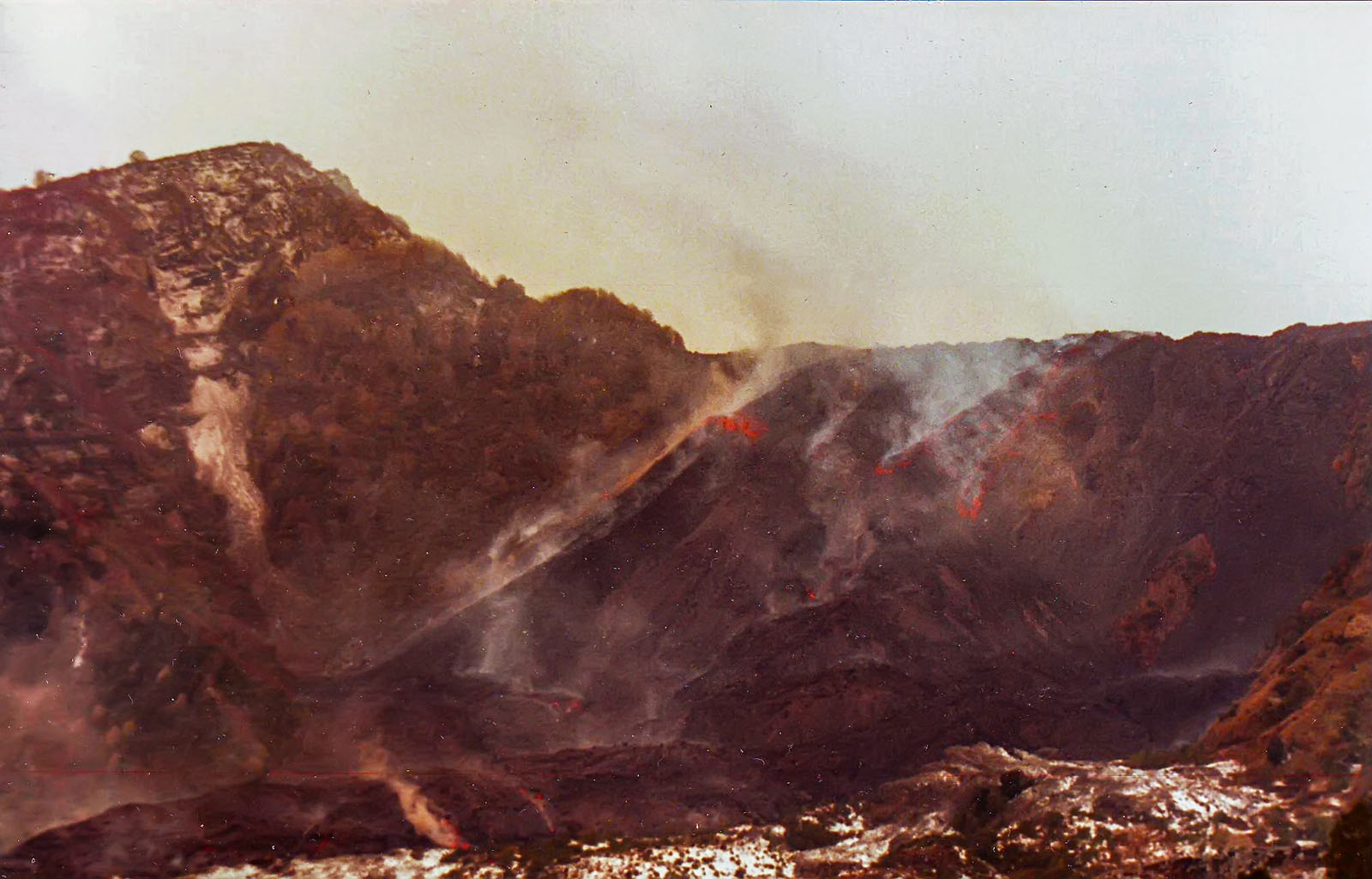 Today it is harsh and barren, because it was filled by the 1991-93
lava flow
Today it is harsh and barren, because it was filled by the 1991-93
lava flow
 , which just touched the town of Zafferana Etnea. After the one in 1983, it went down in history as humankind’s first rather unsuccessful attempt to divert a lava flow.