After the
Battle of Himera
 in 480 BC,
Theron
in 480 BC,
Theron
 tasked the architect Feace with designing a hydraulic system to bring water to the city of Akragas using underground channels.
The aqueducts, dug out by the Carthaginians imprisoned during the battle and named Feaci after the architect, flowed into a single basin located in the southern part of the city, near to what we know today as the Sanctuary of the Chthonic Deities.
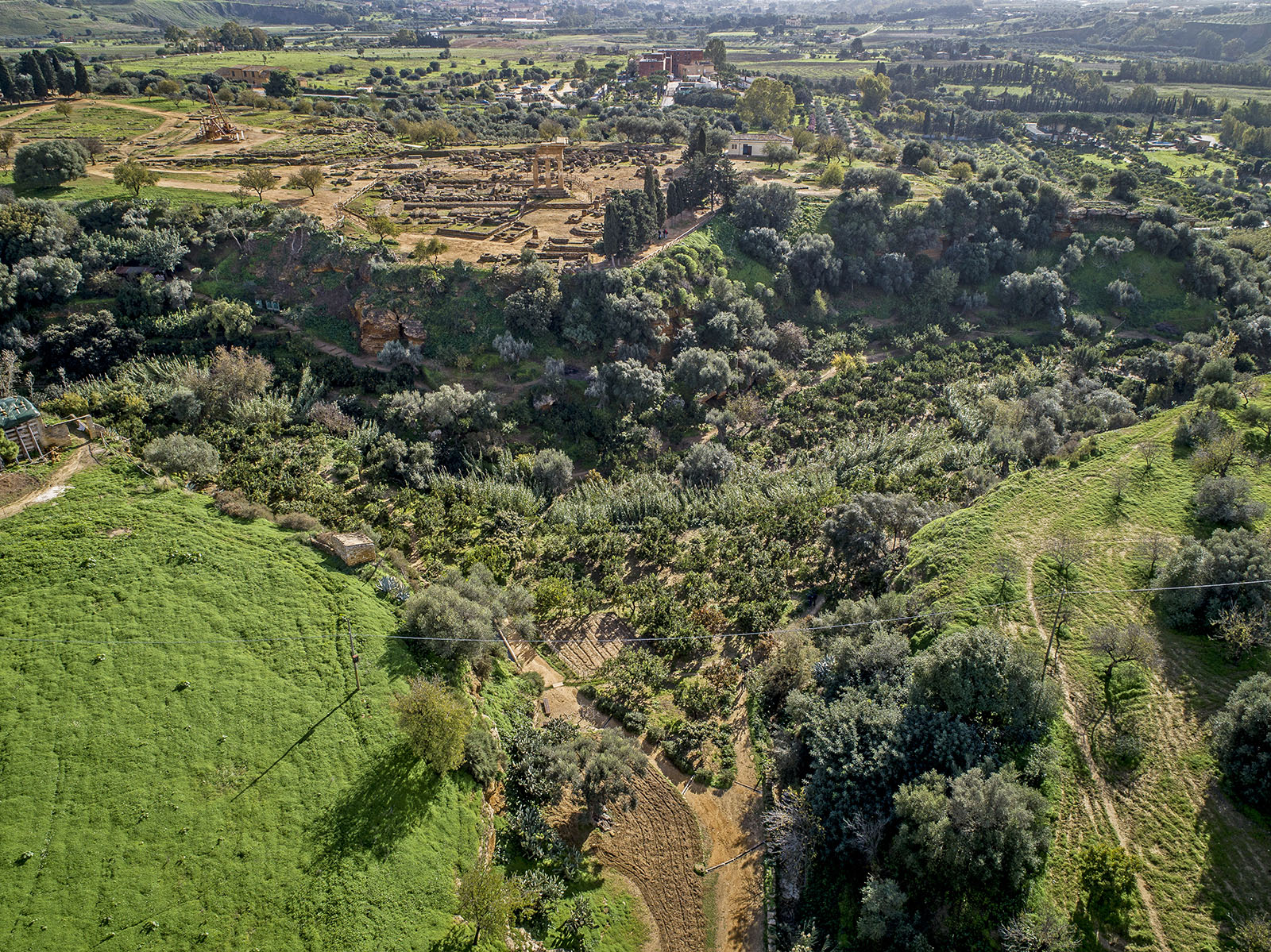 It soon became a veritable pool measuring 1,300 metres long and 9 metres deep. Together with the surrounding nature, the pond full of colourful fish contributed to create a pastoral atmosphere, characterised by the presence of different species of plants and fauna.
Diodorus Siculus later tells us that this area was neglected and the pool dried up.
From that moment on, the land was planted with vines and fragrant fruit trees but, over the years, it went through several periods of disuse and neglect.
The Kolymbetra Garden has now returned to shine with luxuriant vegetation, thanks to its concession to the
Fondo per l’Ambiente Italiano
 (Italian Environment Fund – FAI): through a number of
soil and water bioengineering
(Italian Environment Fund – FAI): through a number of
soil and water bioengineering
 works, maintenance and consolidation works have been carried out on the stream that crosses the area to allow water to irrigate the garden and its crops once more.