The Etna Summit Craters

The continuous evolution of the Etna summit craters

Without a doubt, this is the most beautiful and fascinating part of the “Muntagna”, where eruptions occur most often, especially since 2001. This area also has particular charm because it is the only active volcano summit area in the world to have 4-5 summit craters , that are clearly distinct from each other and behave independently. These characteristics have always intrigued scientists from all over the world, though they are all yet to agree on an explanation.

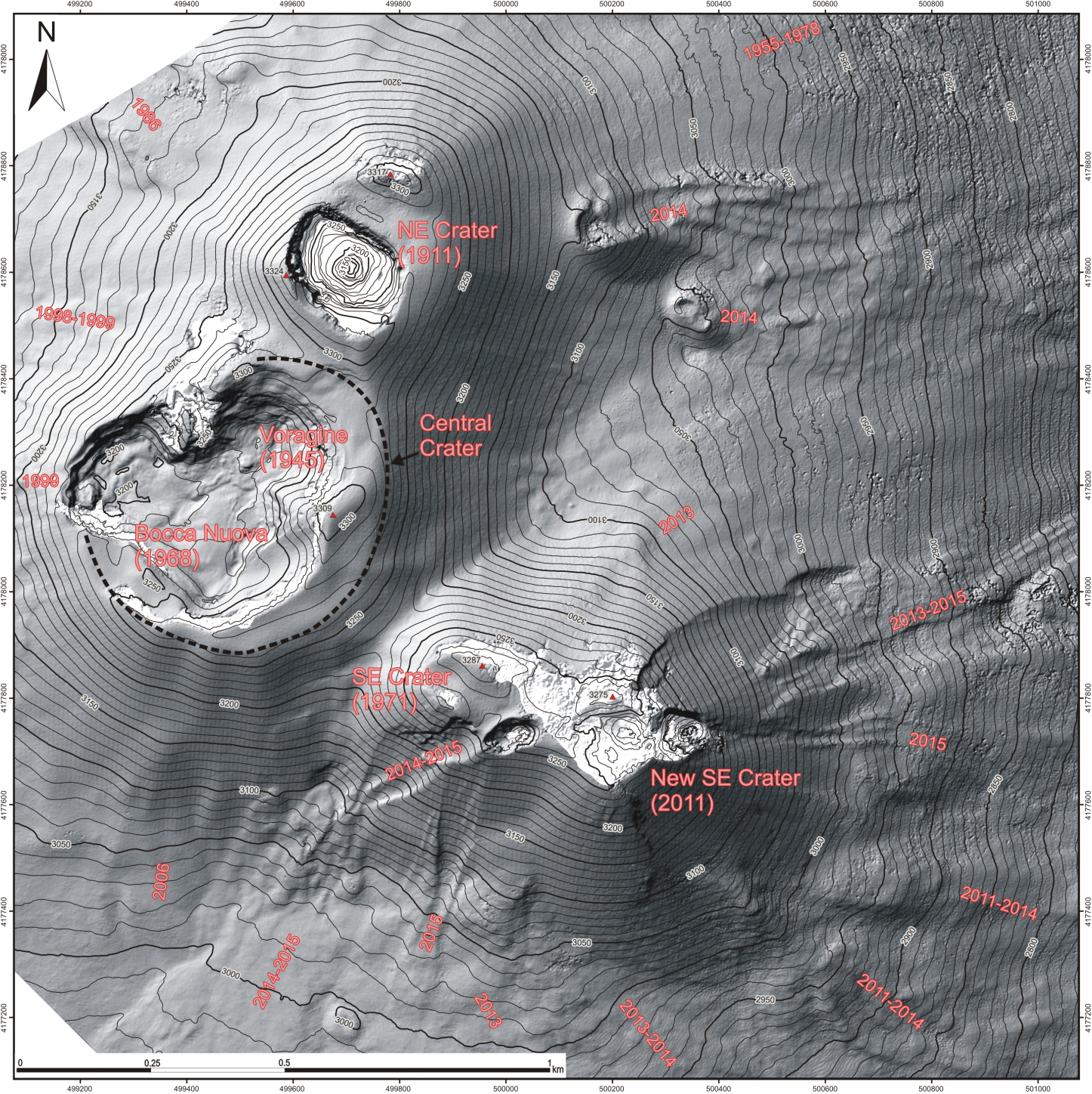
However, the summit crater area was not always configured in this way.
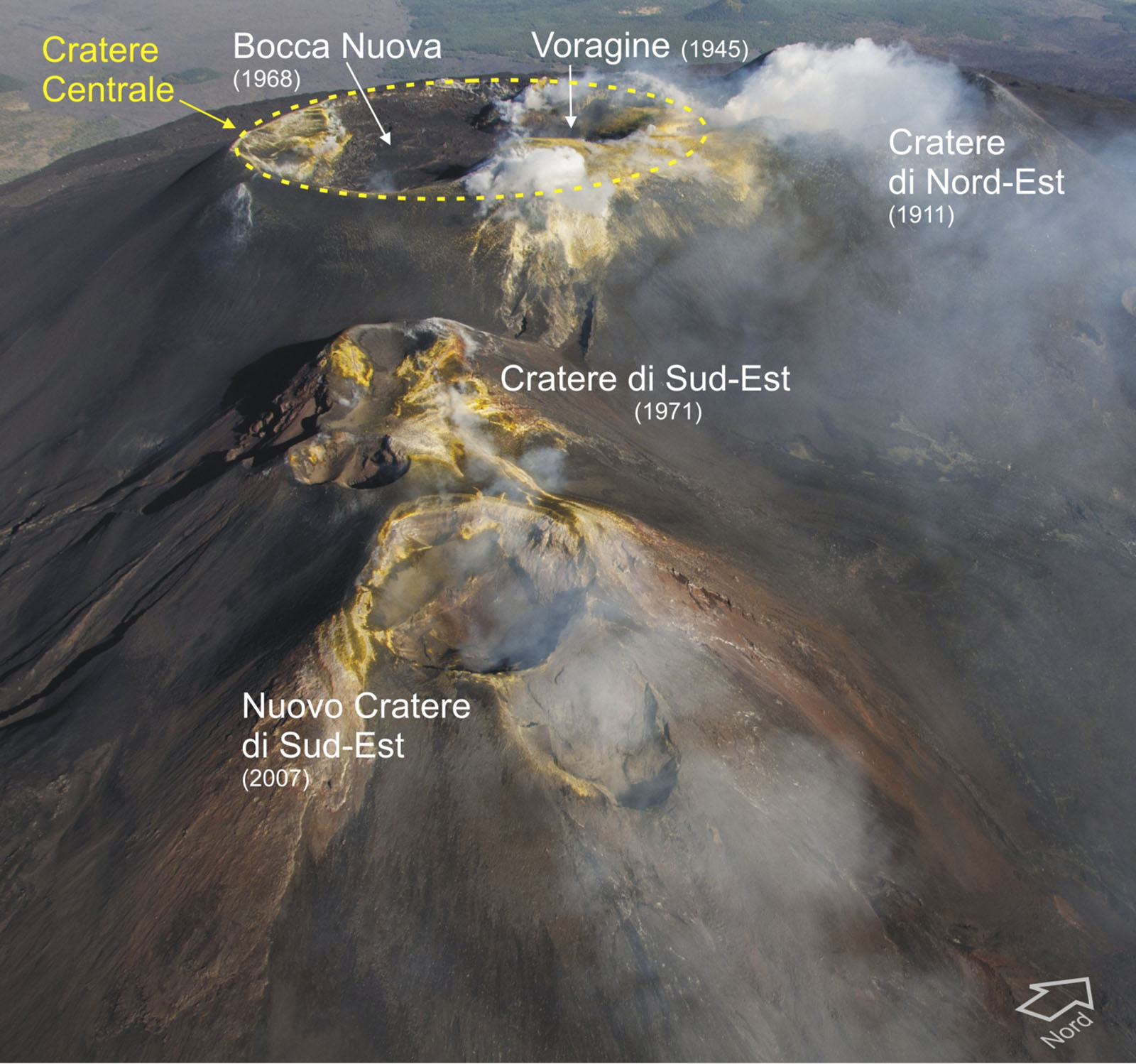
foto aerea crateri sommital
Until 1911, there was only one central crater in the Etna apex area. In 1911, the north-east crater was formed. Later, inside the central crater, the Voragine (1945) and the Bocca Nuova (1968) were formed. In 1971, the south-east crater formed on the south-east flank of the central crater and remained active until 2007. Two new cones joined it, which greatly increased its size.
Today, the north-east crater is the highest point of Etna (3324 metres above sea level, measured in December 2015 by the Italian National Institute of Geophysics and Volcanology).

The senses tell Acireale

The continuous evolution of the Etna summit craters

The 2001 eruption of Etna, when the Mountain seemed to be alive

The Grand Tour in Sicily

The senses tell The summit craters

Valle del Leone and the Elliptical

The Red Mountains and the destructive eruption of 1669

Etna: a marvellous group of different types of flora

Val Calanna, the first step towards a single large volcanic structure

The Etna viewpoint

Lachea Island and the Aci Trezza Stacks

Etna, a natural laboratory where experiments can be carried out

The senses tell The Etna Viewpoint

The senses tell Acicastello and Acitrezza

The fault system of the “Timpe” of Acireale

The senses tell Val Calanna

The first volcanic structures of Etna, between Aci Castello and Aci Trezza

The Elliptical, the first great volcano of Etna

The world’s first (almost successful) attempt to stop a lava flow: the eruption of 1991-93

The senses tell Valle del Leone

Acireale and reconstruction after the 1693 earthquake

The earthquake that changed the geography of eastern Sicily in 1693

Empedocles and his passion for Etna

A fauna yet to be discovered

Acireale and its “timpe”

The eruption of 1928 that destroyed the town of Mascali

The senses tell The Red Mountains

The “notches” of snow

The Jaci river

Humankind and the volcano: how should we behave? Volcanic risk

Torre del Filosofo: at the base of the summit craters (2950 metres)

The living mountain

Why is Etna one of the most studied volcanoes in the world?

The different names of the “Muntagna”

Malavoglia

An ever-evolving volcano

Summit crater activity between 2011 and 2019

The senses tell Torre del Filosofo

The 1669 eruption in Catania