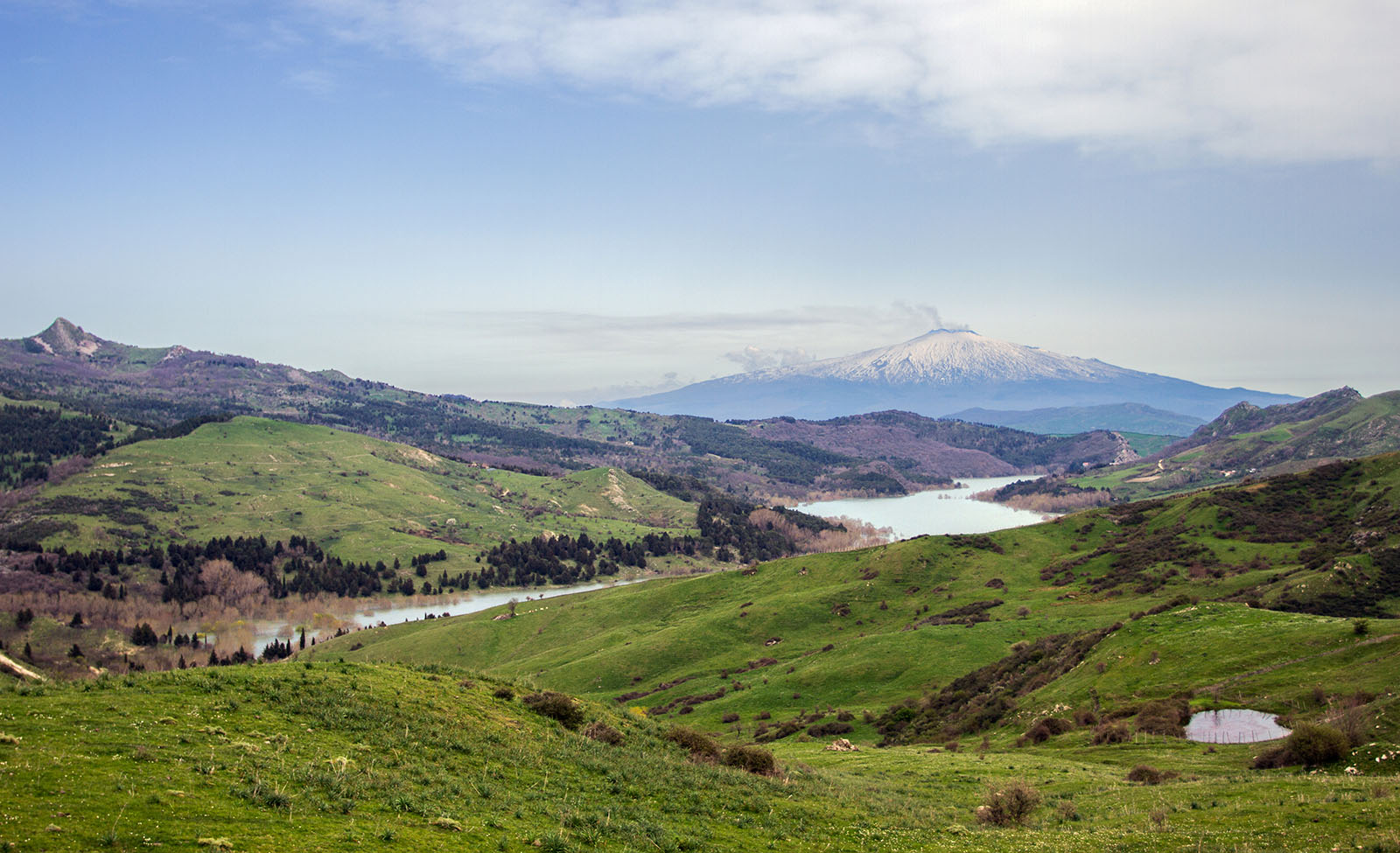
Etna is one of the most active and well-known volcanoes in the world and a wonderful example of how the Earth is still under construction, with it emitting new
magma
 every second.
This volcano is characterised by practically constant eruptive activity from its summit craters, and periodic emissions of lava from its lower altitudes.
These are the reasons why Etna was included in the
UNESCO
 World Heritage List in 2013.
One of its main characteristics is the continuous change in the
type of volcanic activity
 , from totally effusive to highly explosive, in addition to its high number of eruptions. All characteristics that in the last 50 years, since the birth of the scientific discipline of
Volcanology
, have led Etna to become one of the most well-known and used natural laboratories in the world.
, from totally effusive to highly explosive, in addition to its high number of eruptions. All characteristics that in the last 50 years, since the birth of the scientific discipline of
Volcanology
, have led Etna to become one of the most well-known and used natural laboratories in the world.
Both in traditional popular culture and in science, the name Etna is always associated with the word “Mount”, or “Muntagna” in Sicilian dialect.
This is because, with its approximately 3350 metres of elevation above sea level, Mount Etna is practically visible from all of Sicily and a good part of Ionian Calabria.